

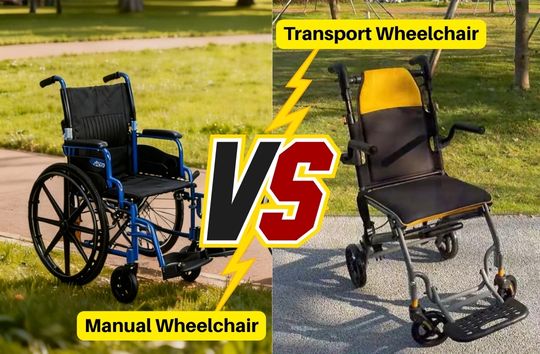
Choosing the right wheelchair is not just about mobility—it directly affects independence, comfort, safety, and quality of life. For many users and caregivers, the decision often comes down to manual wheelchair vs. transport wheelchair. While these two options may look similar at first glance, they are designed for very different lifestyles and use cases.

This guide provides a clear, in-depth comparison to help you understand the real differences, advantages, and limitations of each type, so you can confidently choose the wheelchair that best fits your daily needs.
What Is a Manual Wheelchair?
A manual wheelchair is a self-propelled mobility aid designed for users who can move the chair independently or with occasional assistance. It is one of the most common types of wheelchairs used worldwide.
For users considering a manual wheelchair for daily mobility, understanding the available options is just as important as knowing how they work. Frame materials, wheel size, seat support, and overall weight can significantly impact comfort and performance.
How Manual Wheelchairs Work
Manual wheelchairs are equipped with large rear wheels featuring hand rims. These allow the user to push themselves forward, backward, or turn without relying on a caregiver. The front caster wheels provide balance and steering support.
Most manual wheelchairs are foldable, adjustable, and available in various seat widths and materials, making them suitable for long-term daily use.
Who Should Choose a Manual Wheelchair?
Manual wheelchairs are ideal for:
- Individuals with sufficient upper-body strength
- Users who value independence and control
- People who use a wheelchair for extended periods each day
- Active users who move frequently indoors and outdoors
They are commonly recommended for long-term mobility needs rather than occasional use.

Common Use Scenarios (Daily Use, Outdoor Mobility, Independence)
Manual wheelchairs are widely used for:
- Daily home mobility
- Outdoor navigation on sidewalks or ramps
- Community activities, work, or school
- Users who prefer not to rely on caregivers
Their versatility makes them a popular choice for independent lifestyles.
What Is a Transport Wheelchair?
A transport wheelchair, sometimes called a transport chair, is designed to be pushed by another person rather than self-propelled by the user.
Key Features of Transport Wheelchairs
Transport wheelchairs typically feature:
- Small rear wheels without hand rims
- Lightweight frames for easy lifting
- Compact folding designs
- Push handles for caregivers
Because users cannot propel themselves, transport wheelchairs prioritize portability over independence.
Who Transport Wheelchairs Are Designed For
Transport wheelchairs are best suited for:
- Seniors who require caregiver assistance
- Individuals with limited arm strength
- Temporary mobility needs
- Patients recovering from surgery or injury
These chairs are especially common in hospitals, clinics, and assisted living environments, where portability and ease of handling are essential. In such settings, a portable folding transport chair with a telescopic handle can be particularly practical, as it allows caregivers to maneuver and store the chair with minimal effort during short-distance transfers.

Typical Situations (Travel, Hospital Visits, Short Outings)
Transport wheelchairs are frequently used for:
- Medical appointments
- Airport and travel mobility
- Short trips outside the home
- Occasional or emergency use
They are not intended for all-day, everyday mobility.
Manual vs. Transport Wheelchair: Key Differences at a Glance
Understanding the core differences between a manual wheelchair and a transport wheelchair is essential for making the right decision.
| Feature | Manual Wheelchair | Transport Wheelchair |
|---|---|---|
| Self-Propulsion | Can be self-propelled using large rear wheels with hand rims | Cannot be self-propelled; must be pushed by a caregiver |
| Wheel Size | Large rear wheels (typically 20–24 inches) | Small rear wheels (usually under 12 inches) |
| User Independence | High – allows independent movement and control | Low – requires assistance at all times |
| Weight | Generally heavier due to larger wheels and frame | Lighter and easier to lift or carry |
| Portability | Foldable, but less compact than transport chairs | Highly portable and compact when folded |
| Comfort for Long Use | Designed for extended daily use with better seating support | Best for short-term or occasional use |
| Indoor Performance | Good maneuverability in homes and facilities | Excellent on smooth indoor surfaces |
| Outdoor Performance | Performs better on sidewalks, ramps, and uneven terrain | Limited outdoor capability |
| Caregiver Effort | Minimal once the user is independent | Requires continuous caregiver pushing |
| Typical Use Cases | Daily mobility, independent living, active users | Travel, medical visits, short outings |
| Price Range | Moderate to higher, depending on features | Generally more affordable |
| Maintenance Needs | More components to maintain (wheels, bearings) | Simple design with minimal maintenance |
Which Wheelchair Fits Your Lifestyle?
Your lifestyle should be the primary factor when choosing between a manual and transport wheelchair.
For Independent Daily Users
If you value freedom, self-movement, and long-term comfort, a manual wheelchair is the better choice. It allows users to stay active and mobile without constant assistance.
Independent users often prioritize control, durability, and long-term comfort when selecting a wheelchair. Factors such as frame strength, wheel efficiency, and seating ergonomics can make a noticeable difference in daily use.
If you're comparing options, this manual wheelchair buying guide offers side-by-side evaluations to help narrow down the best choice based on lifestyle and mobility needs.
For Seniors Who Need Caregiver Assistance
Transport wheelchairs are ideal for seniors who are unable to self-propel or who rely heavily on caregivers for mobility.
For Frequent Travelers
Travelers often prefer transport wheelchairs because they are lightweight, fold easily, and fit well in car trunks or airplane storage compartments.
For Short-Term Recovery or Post-Surgery Use
After surgery or injury, a transport wheelchair may be sufficient for temporary mobility until strength and independence return.
Pros and Cons of Manual Wheelchairs
What Are the Benefits of a Manual Wheelchair?
- Encourages independence
- Suitable for daily and long-term use
- Better outdoor mobility
- More customizable options
- Improves upper-body activity
What Are the Disadvantages of Manual Wheelchairs?
- Requires physical effort
- Heavier than transport chairs
- May be difficult for users with limited arm strength
- Higher cost compared to transport wheelchairs
Many modern manual wheelchairs are designed to reduce overall weight without sacrificing comfort or stability. Features such as breathable seating materials, ergonomic armrests, and foldable frames make them suitable for everyday use at home or in the community.
A lightweight and comfortable manual wheelchair is a good example of how thoughtful design can support long-term mobility without unnecessary bulk.
Pros and Cons of Transport Wheelchairs
Advantages of Transport Wheelchairs
- Lightweight and portable
- Easy for caregivers to push
- Affordable and simple design
- Ideal for travel and short outings
- Easy to store and transport
When a Transport Wheelchair May Not Be Ideal
- Not suitable for independent users
- Limited comfort for long periods
- Poor performance on uneven terrain
- Requires constant caregiver assistance
Real-Life Examples: Choosing the Right Wheelchair
Active User Living Independently
An adult with partial mobility and strong upper-body strength benefits most from a manual wheelchair, allowing freedom to move throughout the day without assistance.
Caregiver-Assisted Senior at Home
A senior living with family or in assisted care often prefers a transport wheelchair, as it reduces strain and improves safety during transfers and outings.
In these settings, using a wheelchair ramp at entrances or short stairways can significantly reduce fall risk and caregiver strain, especially during assisted transfers in and out of the home.

Occasional Use for Travel or Appointments
For someone who only needs mobility support during medical visits or travel, a transport wheelchair offers convenience without unnecessary features.
Common Questions About Manual and Transport Wheelchairs (FAQ)
What Is the Difference Between a Transit Wheelchair and a Manual Wheelchair?
A transit or transport wheelchair cannot be self-propelled, while a manual wheelchair allows independent movement.
Who Would Use a Manual Wheelchair?
People with sufficient arm strength who need daily, long-term mobility support.
Why Do People Like Manual Wheelchairs Better?
Manual wheelchairs offer independence, flexibility, and better performance for daily activities.
Can a Transport Wheelchair Be Used Every Day?
It can be used daily for short periods, but it is not recommended for all-day use.
How to Choose a Transport Wheelchair?
Focus on weight, foldability, seat comfort, brake reliability, and caregiver ergonomics.
Is a Manual Wheelchair Hard to Push?
It depends on terrain, user strength, and chair design. Lightweight models are easier to maneuver.
Which Option Is Better After Surgery?
Transport wheelchairs are often preferred during early recovery stages.
Are Transport Wheelchairs Allowed on Airplanes?
Yes, most transport wheelchairs are airline-friendly and easy to gate-check.
Final Thoughts: What Is Better, a Transport Chair or a Wheelchair
The choice between a manual wheelchair and a transport wheelchair ultimately depends on how, where, and how often the chair will be used. Manual wheelchairs empower users with independence and long-term comfort, while transport wheelchairs offer simplicity, portability, and caregiver support.
By carefully evaluating lifestyle, physical ability, and mobility goals, you can confidently select the wheelchair that truly fits your needs and enhances daily life. For those ready to explore wheelchairs for every mobility need, our collection offers options to suit different preferences and daily routines.
Share:
How to Choose the Right Wheelchair for Daily Use
How to Choose the Right Toilet Safety Rails for Your Home