

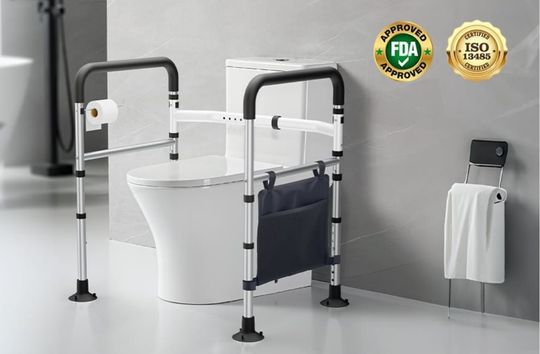
Bathroom safety is often overlooked until a fall, injury, or mobility challenge makes it impossible to ignore. Among all areas of the home, the toilet is one of the most common places where seniors and adults with limited mobility struggle the most. Sitting down and standing up require balance, leg strength, and joint stability—abilities that naturally decline with age, injury, or health conditions.
Toilet safety rails provide a simple yet effective solution. They offer stable support at a critical moment, helping users maintain independence, dignity, and confidence. However, not all toilet safety rails are the same. Choosing the right option for your home depends on several practical factors, from weight capacity to bathroom layout.
This guide explains how toilet safety rails work, who benefits most from them, and how to choose the right type based on real-life needs—not marketing claims.

What Are Toilet Safety Rails and How Do They Work?
Toilet safety rails are supportive handrails installed around or beside a toilet to assist users when sitting down or standing up. Unlike wall-mounted grab bars, these rails are positioned close to the body, allowing users to push down with their arms rather than pull themselves upright.
Most toilet safety rails work by redistributing body weight. Instead of relying entirely on leg strength or balance, users can use their upper body for controlled movement. This significantly reduces strain on the knees, hips, and lower back.
Depending on the design, toilet safety rails may attach directly to the toilet bowl, stand freely on the floor, or combine both methods for added stability. Their goal is not to replace mobility aids, but to make everyday bathroom use safer and more manageable.
Who Should Consider Using Toilet Safety Rails?
Toilet safety rails are not limited to one type of user. They are widely used in private homes, rehabilitation settings, and assisted living environments.

Seniors aging in place
As people age, muscle strength and balance naturally decline. For seniors who wish to remain independent at home, toilet safety rails provide essential support without requiring major bathroom renovations. They help reduce fall risk while preserving daily routines.
People with arthritis or joint pain
Conditions such as arthritis make bending and standing painful. Toilet safety rails allow users to rely less on joint movement and more on arm support, reducing discomfort during repeated daily use.
Post-surgery or injury recovery users
After knee replacement, hip surgery, or lower-body injuries, even basic bathroom tasks can become challenging. Toilet safety rails provide temporary or long-term assistance during recovery, helping users regain confidence safely.
Caregivers supporting family members
For caregivers, assisting someone in the bathroom can be physically demanding and risky. Toilet safety rails reduce the need for hands-on lifting, lowering strain and improving safety for both the caregiver and the user.
Temporary mobility decline scenarios
Illness, fatigue, or short-term injuries can affect mobility at any age. Toilet safety rails are not only for permanent conditions—they can also serve as a temporary safety measure during recovery or health transitions.
How Do I Choose the Right Toilet Rail (Key Factors to Consider)
Choosing the right toilet safety rail involves more than selecting the first option you see. The following factors determine whether a rail will be safe, comfortable, and effective for daily use.
Weight Capacity and Stability
Weight capacity is one of the most important considerations. Toilet safety rails should comfortably support the user’s full body weight, not just partial pressure. A higher weight rating usually indicates stronger construction and better stability.
Stability matters just as much as weight capacity. Rails should not wobble or shift when pressure is applied. Look for designs that distribute weight evenly and remain firmly anchored during use.
Adjustability and Fit for Different Toilets
Not all toilets are the same size or height. Adjustable toilet safety rails allow you to customize width, height, or handle spacing to fit both the toilet and the user. For seniors or users who need rails designed specifically for adjustable support, you can check this toilet safety rails for elderly product for reference.
Proper fit ensures that the rails align naturally with the user’s arms, making movement smoother and reducing awkward body positioning.
Material and Build Quality
Durable materials such as powder-coated steel or reinforced aluminum offer long-term reliability. High-quality toilet safety rails resist rust, moisture, and daily wear, making them suitable for bathroom environments.
Equally important are non-slip grips and smooth edges that prevent hand fatigue or accidental injury.
Ease of Installation
Some toilet safety rails require tools or drilling, while others install using existing toilet bolts or freestanding frames. Ease of installation is especially important for renters or users who prefer non-permanent solutions.
Simple installation also makes it easier to adjust or remove the rails if needs change.
Comfort and Ergonomic Design
Comfort is often underestimated. Rails should feel natural to grip and positioned at a height that allows smooth transitions. Ergonomic design reduces strain on wrists and shoulders while improving overall confidence during use.
Different Types of Toilet Safety Rails Explained
Understanding the different types of toilet safety rails helps narrow down the best option for your home.
Fixed Toilet Safety Rails
Fixed rails are permanently positioned and offer consistent support. They are ideal for users with ongoing mobility challenges who need reliable, everyday assistance.
However, fixed designs may take up more space and are less flexible for shared bathrooms.
Foldable Toilet Safety Rails
Foldable rails provide support when needed and can be folded away when not in use. This makes them suitable for smaller bathrooms or households with multiple users.
They balance convenience with functionality, offering safety without permanently occupying space.
Portable and Freestanding Toilet Safety Rails
Portable rails are not attached to walls or floors. Instead, they rely on a stable base placed around the toilet. These are ideal for temporary use, travel, or rental homes.
While convenient, portability should never compromise stability. A solid frame and non-slip feet are essential.
Adjustable Toilet Safety Rails
Adjustable rails combine flexibility with long-term usability. They can adapt to different users, toilet sizes, or changing mobility needs over time.
This type is especially useful in households where more than one person may need support.
Toilet Safety Rails vs Other Bathroom Safety Solutions
Bathroom safety can be improved in several ways, but each solution serves a different purpose.
Toilet Safety Rails vs Grab Bars
Grab bars are mounted on walls and provide general support for balance. Toilet safety rails, on the other hand, are positioned closer to the user and specifically assist with sitting and standing motions.
For users with limited leg strength, toilet safety rails often offer more practical support.
Toilet Safety Rails vs Raised Toilet Seats
Raised toilet seats reduce the distance required to sit or stand, which helps users with knee or hip pain. However, they do not provide hand support. Toilet safety rails address both height and balance concerns when used together or separately.
Toilet Safety Rails vs Toilet Frames
Toilet frames fully surround the toilet and offer comprehensive support. While effective, they are bulkier than standard toilet safety rails and may not fit well in smaller bathrooms.
If you are still comparing different bathroom safety solutions, our toilet safety rails buying guide offers a broader comparison of safety rails, frames, and other bathroom aids.
Choosing Toilet Safety Rails for Small Bathrooms or Rentals
Limited space should not prevent bathroom safety. Many toilet safety rails are designed specifically for compact bathrooms or rental homes.
Foldable or freestanding rails allow support without drilling into walls or floors. Adjustable designs help maximize space efficiency while maintaining functionality.
For renters, non-permanent installation options are especially valuable, allowing safety improvements without property damage.
In compact bathrooms or rental homes, choosing from space-efficient toilet safety aids can make it easier to improve safety without permanent modifications.
Safety Standards, Weight Ratings, and Certifications to Look For
Reliable toilet safety rails follow established safety standards and clearly display weight ratings. These specifications indicate the level of testing the product has undergone.
Certifications from recognized safety or medical equipment organizations add an extra layer of trust. While certifications are not mandatory, they often reflect higher manufacturing and testing standards.
Always verify that the rail meets or exceeds the user’s needs rather than choosing based on appearance alone.
FAQs about Choosing the Toilet Safety Rails
Can Toilet Rails Be Used with Any Toilet?
Most toilet safety rails are designed to fit standard toilet shapes and sizes. Adjustable models offer greater compatibility, but it is important to measure your toilet and surrounding space before choosing.

What Is the Best Toilet Height for Seniors?
A higher toilet height generally makes sitting and standing easier for seniors. Comfort height toilets, combined with toilet safety rails, offer improved accessibility.
Do Toilet Safety Rails Really Help Prevent Falls?
Yes. Toilet safety rails reduce fall risk by providing stable hand support during transitions. They are especially effective for users with balance issues or reduced leg strength.
Is a Taller Toilet Better for Your Knees?
Taller toilets reduce the amount of knee bending required, which can ease joint strain. When paired with toilet safety rails, they offer even greater relief.
What Is the Best Toilet for Senior Citizens?
The best toilet for seniors depends on height, comfort, and support options. Many seniors benefit from comfort-height toilets combined with safety rails for added stability.
What Are Common Mistakes People Make When Choosing Toilet Safety Rails?
Common mistakes include ignoring weight capacity, choosing non-adjustable designs, or prioritizing appearance over functionality. Proper fit and stability should always come first.
Can Toilet Safety Rails Be Used by Heavier Users?
Yes, as long as the rails are rated to support the user’s weight. High-capacity and reinforced designs are available for heavier users.
How Long Does It Take to Install Toilet Safety Rails?
Installation time varies by design. Many models can be installed in under 30 minutes, especially those that use existing toilet bolts or freestanding frames.
Are Toilet Safety Rails Suitable for Seniors Living Alone?
Absolutely. Toilet safety rails provide independence and peace of mind for seniors who live alone, reducing reliance on assistance and improving daily safety.
Final Thoughts: Making Bathroom Safety a Simple, Practical Upgrade
Improving bathroom safety does not require a full renovation or complex medical equipment. Toilet safety rails offer a practical, affordable way to reduce risk and support independence in everyday life.
By considering factors such as stability, fit, installation, and user needs, you can choose a solution that blends seamlessly into your home while providing meaningful support. Whether for aging in place, recovery, or temporary mobility challenges, the right toilet safety rails can make one of the most essential daily activities safer and more comfortable.
Share:
Manual vs. Transport Wheelchair: Which One Fits Your Lifestyle
When Is a Rollator Better Than a Cane or Crutches