

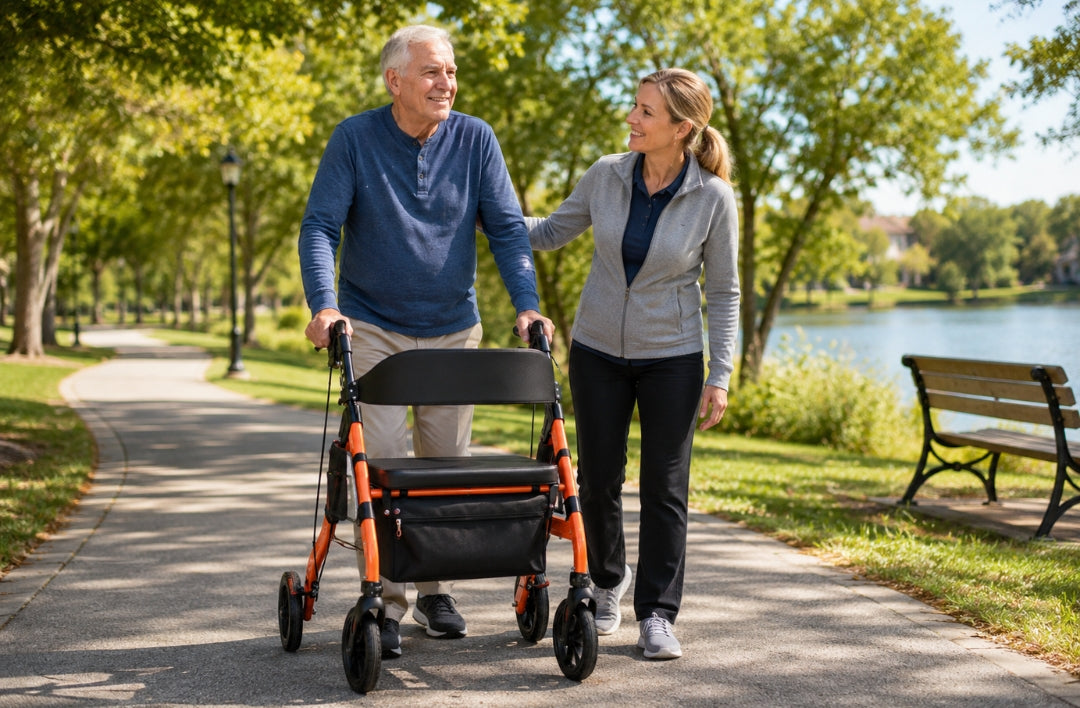
Stroke recovery is a long and highly individual journey. For many survivors, one of the biggest milestones is regaining the ability to walk safely and confidently again. However, challenges such as muscle weakness, poor balance, fatigue, and fear of falling can make early mobility extremely difficult.
This is where a rollator walker becomes an essential rehabilitation tool. Unlike traditional walkers, rollators provide smoother movement, better support, and built-in rest options that are especially important for stroke survivors rebuilding their walking ability.
Understanding Stroke Recovery and Walking Difficulties
After a stroke, the brain may lose its ability to properly coordinate movement, especially on one side of the body. According to the American Stroke Association, mobility impairment is one of the most common long-term effects of stroke.
Common walking challenges include:
- Muscle weakness (hemiparesis)
- Poor balance and coordination
- Foot drop
- Fatigue during short distances
- Fear of falling
These challenges often make unassisted walking unsafe in the early stages of recovery.
What Is a Rollator Walker

A rollator walker is a wheeled mobility aid designed to support users who need stability while walking but still want freedom of movement.
Unlike traditional walkers, rollators include wheels, hand brakes, and often a built-in seat for resting.
Main Features of a Rollator Walker
- Four wheels for smooth movement
- Hand-operated brakes for safety
- Lightweight aluminum frame
- Built-in seat and backrest
- Storage basket or pouch
Rollator Walker vs Standard Walker for Stroke Recovery

Many caregivers and patients ask whether a rollator or a standard walker is better after a stroke.
The answer depends on mobility level, but in most mild-to-moderate stroke recovery cases, rollators offer significant advantages.
Key Differences
- Standard Walker: Requires lifting, slower movement, higher stability for severe weakness
- Rollator Walker: Continuous movement, better for outdoor use, includes seating option
For stroke survivors who can bear weight and take assisted steps, rollators often provide a more natural walking pattern and better long-term usability.
7 Ways a Rollator Walker Helps Stroke Survivors Walk Again Safely
1. Improves Balance and Stability
A rollator provides multiple points of support, helping stroke survivors maintain balance during walking transitions.
2. Reduces Risk of Falls
Hand brakes and stable wheelbase design significantly reduce the risk of slipping or losing control.
3. Supports Longer Walking Sessions
The built-in seat allows users to rest whenever needed, making longer rehabilitation walks possible.
4. Builds Confidence in Mobility
Fear of falling is reduced when users know they have continuous support and an immediate place to sit.
5. Enhances Rehabilitation Progress
Rollators enable repeated walking practice, which supports neuroplasticity and motor relearning after stroke.
6. Improves Independence in Daily Life
Users can safely move around their home, community, or rehabilitation centers with less caregiver assistance.
7. Supports Outdoor Mobility
Unlike standard walkers, rollators handle uneven outdoor surfaces more effectively.
When Should a Stroke Survivor Start Using a Rollator Walker?
A rollator may be appropriate when the user:
- Can stand with partial or full support
- Can bear weight on at least one leg
- Has sufficient hand strength to operate brakes
- Has been cleared by a physical therapist
However, it may not be suitable for individuals with severe balance loss or inability to control movement safely.
How to Choose the Best Rollator Walker for Stroke Recovery
Choosing the right rollator is essential for safety and recovery outcomes.
Lightweight Design
A lightweight frame reduces fatigue and improves maneuverability.
Adjustable Handle Height
Proper alignment improves posture and walking efficiency.
Reliable Braking System
Strong brakes are essential for safe sitting and stopping.
Built-in Seat (Critical for Stroke Recovery)
Fatigue is common after stroke, making a seat essential for rest breaks during walking sessions.
Recommended Product Category
For stroke survivors, mobility needs can vary significantly depending on the stage of recovery, ranging from basic walking support to more advanced rehabilitation assistance.
To help users choose the most suitable option, we recommend exploring our curated selection of supportive mobility solutions, which includes different types of walking aids designed for safety, stability, and gradual independence recovery.
Our most recommended option for stroke recovery is a rollator walker with seat, designed specifically for users who need frequent rest while maintaining independence. You can explore the full range of suitable options here: mobility walking aids.
Best Rollator Walker with Seat for Stroke Survivors

If you are looking for a highly supportive option, rollator walkers with a built-in seat and backrest are especially beneficial for stroke recovery.
See our top picks here: Best Rollator Walker with Seat and Basket
These models are particularly helpful for users who experience fatigue, allowing safe rest during walking sessions and outdoor mobility.
Safety Tips for Using a Rollator After Stroke
- Always lock brakes before sitting
- Walk on flat surfaces during early recovery
- Wear supportive, non-slip footwear
- Avoid rushing or sudden directional changes
- Keep posture upright while walking
Realistic Stroke Recovery Progress (What to Expect)
Stroke recovery varies widely, but most rehabilitation follows a gradual progression:
- Early stage: Assisted indoor walking
- Middle stage: Short-distance independent walking
- Advanced stage: Outdoor walking with support
A rollator walker plays a key role throughout all these stages by providing safety and confidence.
FAQ: Rollator Walker for Stroke Recovery
Can stroke survivors walk again with a rollator?
Yes. Many stroke survivors use rollators as part of rehabilitation to regain safe walking ability.
Is a rollator better than a walker after a stroke?
In many mild-to-moderate cases, yes. Rollators offer smoother movement and better endurance support.
We have created a detailed comparison explaining the differences between both options here: rollator vs walker, including when each type is more appropriate for stroke recovery.
How long does stroke walking recovery take?
Recovery can take weeks to months or longer depending on severity and rehabilitation consistency.
Are rollators safe for elderly stroke patients?
Yes, when properly fitted and used under professional guidance, they are generally safe and effective.
Conclusion
Walking again after a stroke is a major milestone that requires patience, rehabilitation, and the right support tools.
A rollator walker provides not only physical stability but also emotional confidence, allowing stroke survivors to practice walking safely, reduce fatigue, and gradually regain independence.
For many users, especially those in the middle stages of recovery, a rollator walker with seat is the most practical and supportive option, combining mobility with essential rest functionality. Explore our collection of lightweight rollator walkers designed to support safe mobility during stroke recovery.

Share:
How to Prevent Bathroom Falls for Seniors: 15 Practical Safety Tips
Rollator Weight Limits Explained: What Really Matters