

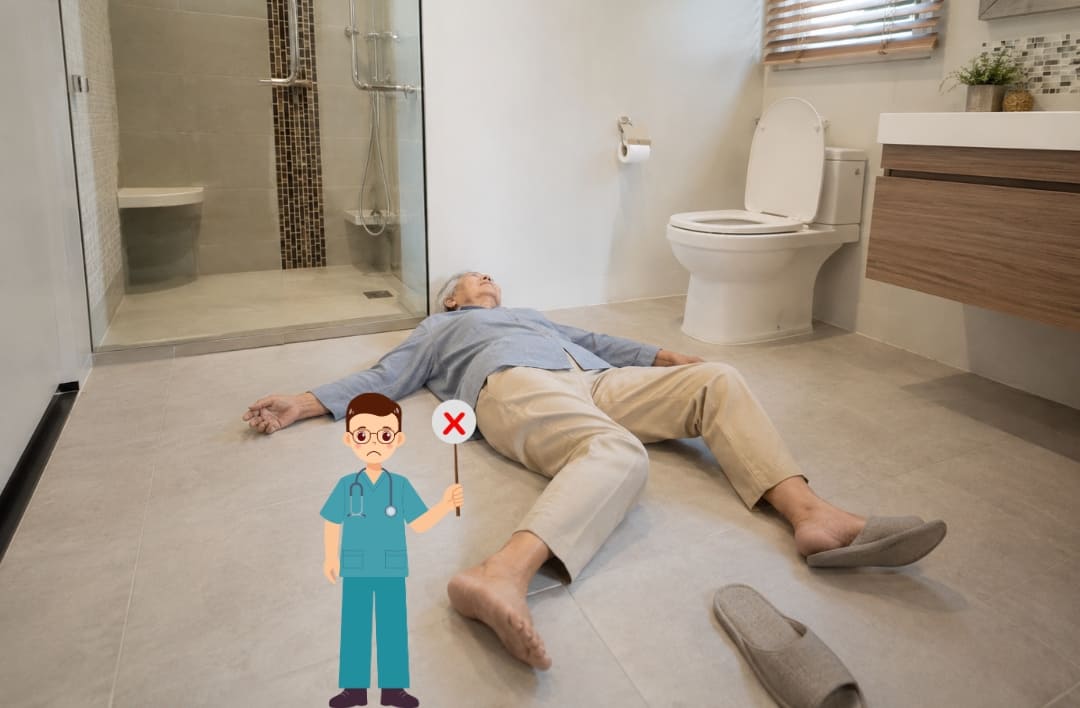
Bathroom falls are one of the most common and dangerous household accidents among older adults. For seniors, even a minor slip can lead to serious consequences such as fractures, head injuries, or long-term mobility loss.
This guide provides 15 practical safety tips to help prevent bathroom falls for seniors and improve home safety through simple environmental changes and essential mobility equipment.
Why Bathroom Falls Happen
Bathroom accidents rarely happen for a single reason. They are usually caused by a combination of wet surfaces, reduced mobility, poor lighting, and unsafe bathroom design.
- Slippery and wet floors from showers and sinks
- Reduced balance and muscle strength in seniors
- Improper bathroom layout without safety support
- Poor lighting during nighttime bathroom use
- Rushing or fatigue during movement
Install Non-Slip Mats in Wet Areas

pic from mamattingsolutions
Slippery bathroom floors are one of the leading causes of falls among seniors, especially in areas that stay wet after showers or bathing.
Non-slip mats help create friction between the feet and the floor surface, improving stability and reducing the likelihood of accidental slips.
They are commonly used in home bathrooms, assisted living facilities, and post-surgery recovery environments where mobility may be limited.
Placing mats inside the shower, near the bathtub, and outside the bathing area can significantly improve overall bathroom safety.
Improve Bathroom Lighting

pic from destinationlighting
Poor lighting is a hidden risk factor that often contributes to bathroom falls, especially during nighttime use.
Seniors may have difficulty seeing wet surfaces, steps, or obstacles when lighting is too dim, increasing the chance of missteps.
Installing bright LED lighting or motion-sensor night lights helps improve visibility without requiring users to search for switches in the dark.
This is especially helpful for elderly individuals who frequently use the bathroom at night or have reduced vision.
Keep the Bathroom Free of Clutter
A cluttered bathroom increases the risk of tripping, particularly in small spaces where movement is limited.
Items such as towels, bottles, laundry baskets, or cleaning tools should never be left on the floor or in walking paths.
Maintaining a clean and organized bathroom layout is a simple but highly effective way to reduce fall hazards for seniors and caregivers.
Wall-mounted shelves and storage solutions can help keep essential items accessible while freeing up floor space.
Control Water Temperature
Sudden changes in water temperature can cause dizziness, discomfort, or loss of balance, especially for older adults or individuals with cardiovascular conditions.
Anti-scald devices and thermostatic mixing valves help maintain a stable water temperature, making bathing safer and more comfortable.
This is particularly important in home care settings and rehabilitation environments where patients may already have reduced stability.
Keep Essentials Within Easy Reach
Reaching for soap, shampoo, or towels while standing on a wet surface can significantly increase the risk of slipping.
For seniors with limited mobility, even small stretching movements may affect balance.
Keeping all essential bathing items within arm’s reach helps minimize unnecessary movement and supports safer bathing routines.
This approach is commonly recommended in elderly care and post-operative recovery planning.
Install Grab Bars in Key Areas

Grab bars are one of the most effective structural safety upgrades for preventing bathroom falls.
They provide stable physical support when entering or exiting the shower, standing up from the toilet, or moving within wet areas.
Proper placement is critical, with grab bars typically installed near the shower entrance, inside the shower area, and beside the toilet.
In home safety assessments, grab bars are often considered a foundational requirement for senior bathroom modifications.
Use a Shower Chair for Stability

For seniors or individuals with limited mobility, standing for the entire shower can be tiring and unsafe, especially on wet and slippery surfaces.
A shower chair allows users to sit comfortably while bathing, which helps reduce fatigue and significantly lowers the risk of slipping.
In many home care and senior safety setups, a properly designed bathroom shower seating solution is commonly used to improve stability and independence during daily bathing routines.
If mobility support is needed, a well-designed shower chair for seniors and disabled users can make daily bathing much safer.
Install Raised Toilet Seats

Raised toilet seats help seniors reduce the effort required to sit down and stand up, which is especially important for individuals with weakened leg strength or joint conditions such as arthritis.
By elevating the seating position, this simple modification reduces pressure on the knees and hips, making bathroom use safer and more comfortable for elderly users and post-surgery patients.
This type of support is commonly recommended in home care and rehabilitation settings where mobility is limited and fall risk is higher.
Use Handheld Shower Heads

pic from kohlerwalkinbath
Handheld shower heads allow users to control water direction while remaining seated, reducing the need to stand or turn frequently on wet surfaces.
This is particularly helpful for seniors or individuals with balance issues, as it minimizes unnecessary movement during bathing.
In assisted living and home recovery environments, this tool is often used together with shower chairs to improve bathing safety.
Consider Walk-In Shower Modifications
Walk-in showers remove the need to step over high bathtub edges, which is one of the most common causes of bathroom falls among seniors.
By creating a low or barrier-free entry, walk-in designs significantly improve accessibility for individuals with limited mobility or reduced balance.
This type of bathroom modification is often considered a long-term safety investment for aging in place and independent living.
Avoid Rushing in the Bathroom
Many bathroom accidents occur when seniors move too quickly or change posture without proper balance support.
Slow and deliberate movements help the body adjust safely between standing, sitting, and turning on wet surfaces.
Caregivers often encourage a steady routine to reduce fall risk during daily hygiene activities.
Wear Non-Slip Footwear in Bathroom

pic from preventproducts
Walking barefoot on wet bathroom floors increases the risk of slipping, especially on tile or smooth surfaces.
Non-slip indoor slippers provide additional grip and stability, helping seniors maintain balance during movement.
This is a simple but effective safety habit commonly recommended in elderly home care environments.
Ask for Assistance When Needed
Seniors with reduced mobility should not hesitate to seek help during bathing or toileting activities when needed.
Caregiver assistance can significantly reduce fall risk, especially during high-risk movements such as stepping into the shower or standing up.
This is particularly important for individuals recovering from surgery or dealing with chronic mobility limitations.
Use Mobility Aids if Necessary

Mobility aids such as walkers or rollators provide additional support for seniors with balance difficulties when moving to and from the bathroom.
These devices help stabilize movement and reduce strain on the lower body, especially during transitional walking.
In rehabilitation and post-surgery recovery programs, mobility aids are often an essential part of daily safety planning.
Improve Strength and Balance
Physical strength and balance play a key role in preventing bathroom falls among older adults.
Light exercises, stretching routines, and physical therapy can help improve coordination, leg strength, and overall stability over time.
Maintaining mobility is especially important for seniors who wish to remain independent at home for longer periods.
When Bathroom Safety Products Are Necessary
For individuals with higher fall risk, including seniors recovering from surgery or those with chronic mobility limitations, a combination of safety modifications is usually recommended.
This often includes a full range of bathroom safety solutions designed for home use and assisted living environments.
Recommended Bathroom Safety Solutions
- Shower chairs for stability
- Grab bars for support
- Non-slip mats for floor safety
- Raised toilet seats for easier use
These products are most effective when used together as part of a complete bathroom safety system, especially for seniors and individuals with reduced mobility.
For users who require a more comprehensive setup, a full range of bathroom safety aids is available to support different home and care environments.
Frequently Asked Questions
What is the most common cause of bathroom falls?
Slippery floors combined with reduced mobility are the most common causes.
Are shower chairs safe for seniors?
Yes, they provide stability and reduce the risk of slipping during bathing.
How can seniors prevent slipping in the shower?
Using non-slip mats, grab bars, and shower chairs is the most effective solution.
Conclusion
Bathroom falls are preventable with the right combination of safety equipment, environmental improvements, and daily habits.
By implementing these 15 practical safety tips, seniors can significantly reduce fall risk while maintaining independence and confidence at home.
For those looking to further improve bathroom safety, a complete set of bathroom safety products can provide additional support in higher-risk situations.
Share:
Best Shower Chair for Disabled Users (2026 Buying Guide for Safety & Independence)
How a Rollator Walker Can Help Stroke Survivors Walk Again Safely