

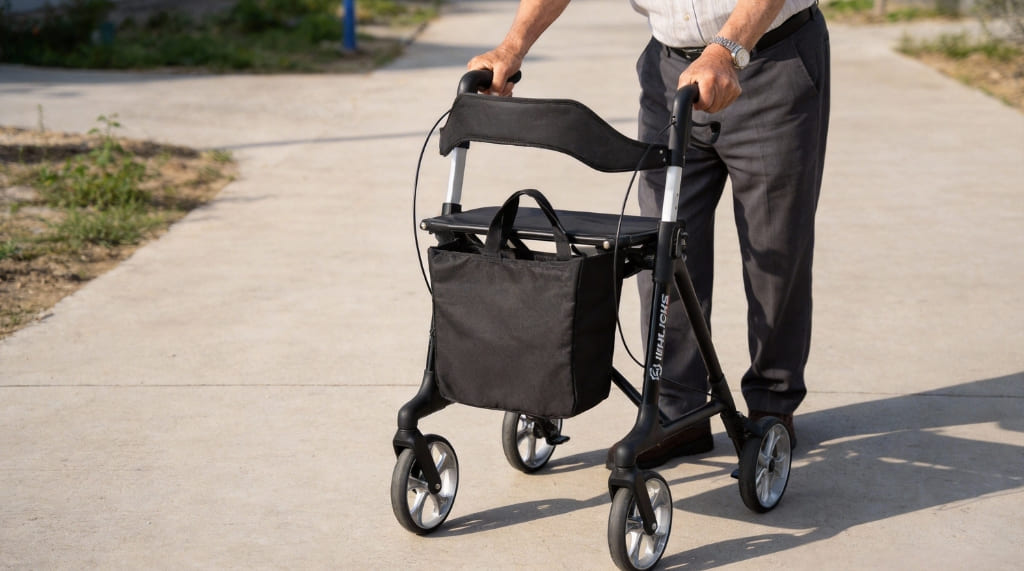
A rollator is a wheeled walking aid designed for people who need balance support while maintaining mobility. Unlike traditional walkers that must be lifted with each step, rollators move smoothly on wheels and typically feature three or four wheels, hand brakes, and often a built-in seat. They are commonly used by seniors and individuals with mild mobility challenges who want to stay active and independent.
Rollators are especially popular for daily activities such as walking outdoors, shopping, or moving around the home, offering both support and convenience without overly restricting movement.
What Is a Rollator Used For?
Rollators are primarily used to improve balance and stability while walking, particularly for people who can walk independently but feel unsteady or tire easily. They help reduce the risk of falls while allowing users to maintain a natural walking pace.
Common uses include:
- Walking longer distances with less fatigue
- Navigating outdoor environments like sidewalks or parks
- Providing a safe place to sit and rest when needed
- Supporting daily errands such as shopping or commuting short distances
Many modern rollators include a built-in seat and backrest, allowing users to take short breaks during activities without needing to find a bench or chair.
Who Needs a Rollator?
A rollator is suitable for a wide range of users, especially those who value independence but need some extra support.
People who may benefit from a rollator include:
- Active seniors who want added stability while walking (may benefit from a sturdy walker for elderly) for extra support
- Individuals recovering from surgery or injury who need balance support
- People with arthritis or joint pain that makes walking tiring
- Users with mild mobility or balance issues who do not require full weight-bearing assistance
For many users, a lightweight rollator offers a balance between safety and freedom, providing support without limiting everyday movement.

Rollator vs. Standard Walker: What’s the Difference?
Although rollators and standard walkers serve similar purposes, they are designed for different mobility needs.
A standard walker:
- Has no wheels or only two front wheels
- Must be lifted with each step
- Provides strong weight support
- Is best for users with significant balance or strength limitations
A rollator:
- Has three or four wheels
- Moves continuously without lifting
- Includes hand brakes for speed control
- Often features a seat for resting
- Is ideal for users who need balance support rather than full weight support
Rollators are often preferred for outdoor use or longer walks, especially models designed with larger wheels and reliable braking systems.

Key Parts of a Rollator and How They Work
Understanding the main components of a rollator can help users choose the right model and use it safely.
- Wheels: Allow smooth movement and improve mobility, with larger wheels offering better performance outdoors
- Hand brakes: Enable users to control speed and stop safely, especially on slopes or uneven surfaces
- Seat and backrest: Provide a place to rest during walks, improving comfort and endurance
- Frame: Supports the user’s weight while remaining lightweight and easy to maneuver
- Folding mechanism: Allows the rollator to fold for transport or storage
Many rollators are designed to fold easily, making them practical for car travel or small living spaces.
Indoor vs. Outdoor Rollators
Rollators can generally be categorized based on where they are most often used.
Indoor rollators are typically:
- Narrower in width
- Lightweight and easy to maneuver
- Suitable for tight spaces and smooth floors
Outdoor rollators often feature:
- Larger wheels for uneven surfaces
- Sturdier frames for stability
- Better braking systems for safety
Some rollators are designed as versatile models that work well both indoors and outdoors, depending on the user’s lifestyle and walking habits.
How to Choose the Right Rollator
Choosing the right rollator depends on how and where it will be used. Key factors to consider include:
- User height: Adjustable handle height is essential for proper posture
- Weight capacity: The rollator should safely support the user’s weight
- Wheel size: Larger wheels are better for outdoor use, while smaller wheels suit indoor spaces
- Foldability: A foldable rollator is helpful for travel and storage
- Intended use: Daily indoor movement, outdoor walking, or a combination of both
Selecting a rollator that matches the user’s environment and mobility needs can significantly improve comfort and confidence while walking. For users who travel frequently or prefer a lightweight option, a lightweight folding travel walker with seat can provide support while being easy to carry and store.
Common Questions About Rollators
What is the difference between a rollator and a walker?
A rollator has wheels and hand brakes, allowing continuous movement, while a standard walker must be lifted and provides more weight-bearing support.
Is a rollator good for seniors?
Yes. Rollators are commonly used by seniors who can walk independently but need extra balance and stability.
Can you sit on a rollator?
Most rollators include a built-in seat designed for resting during walks.
Are rollators suitable for outdoor use?
Many rollators are designed for outdoor use, especially those with larger wheels and strong braking systems.
How do I know what size rollator I need?
The correct rollator size depends on the user’s height and handle height adjustment, ensuring proper posture and comfort while walking.
Share:
How Wide Is a Wheelchair? A Complete Size Guide for Home, Travel, and Daily Use
How to Make Your Home Wheelchair Accessible: Tips for Transport Wheelchair Users