

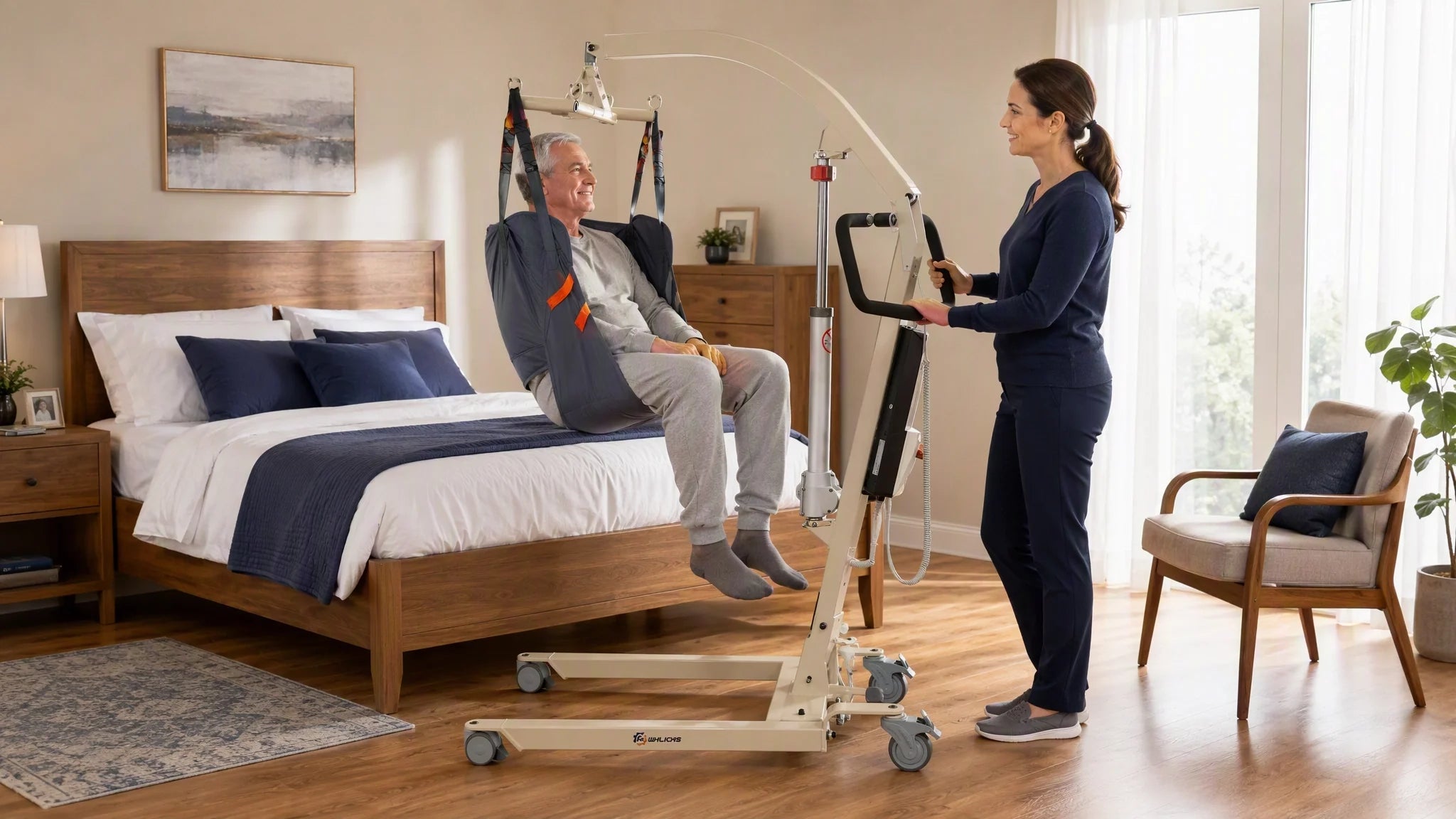
Caring for an elderly loved one at home often means helping with everyday movements that many people take for granted.
Getting out of bed.
Moving to a wheelchair.
Going to the bathroom.
Sitting down for meals.
For seniors with limited mobility, these simple activities can become challenging and even risky.
Many caregivers try to help by manually lifting or supporting their loved ones. However, repeated transfers can create safety concerns for both the person receiving care and the caregiver.
A safer transfer routine combines proper techniques, a supportive environment, and the right mobility equipment. For families who need additional assistance, an electric patient lift transfer chair can help make daily transfers more controlled and comfortable.
Why Elderly Transfers Become More Difficult Over Time

Aging does not always mean losing independence, but physical changes can make movement more challenging.
Many seniors experience:
- Reduced muscle strength
- Poor balance
- Joint stiffness
- Recovery after surgery
- Stroke-related mobility limitations
- Difficulty standing independently
When someone cannot fully support their own body weight, even a short transfer can become stressful.
Common daily transfer situations include:
Bed to Wheelchair Transfers
Moving from a bed into a wheelchair requires balance, coordination, and strength. Without proper support, seniors may feel unstable or afraid of falling.
Wheelchair to Bathroom Transfers
Bathrooms are one of the most challenging areas in a home because of:
- Limited space
- Smooth surfaces
- Increased fall risks
Safe transfer equipment can provide additional stability in these situations.
Helping Someone After a Fall
One of the most difficult moments for caregivers is finding an elderly family member on the floor.
The first reaction is often:
“I need to lift them up immediately.”
However, pulling someone up manually can increase the risk of:
- Additional injury
- Loss of balance
- Caregiver back strain
A safer approach is to use proper lifting assistance designed for mobility challenges.
The Risks of Manual Elderly Transfers
Many families begin with manual assistance because it seems like the easiest solution.
However, frequent lifting can create several problems.

1. Higher Risk of Falls
When a person has limited leg strength or balance, unexpected movements can quickly lead to falls.
A fall may result in:
- Fractures
- Hospital visits
- Longer recovery times
- Reduced confidence in movement
2. Physical Strain for Caregivers
Caregivers often focus on protecting their loved ones while ignoring their own physical limits.
Repeated lifting may cause:
- Lower back pain
- Shoulder injuries
- Muscle fatigue
Protecting the caregiver is also an important part of safe home care.
3. Reduced Comfort and Dignity
Many elderly individuals feel uncomfortable when they need to be physically lifted by another person.
A safer transfer method allows them to maintain:
- More independence
- Greater confidence
- A stronger sense of dignity
How to Safely Transfer an Elderly Person
The safest transfer method depends on each person's mobility level.
For individuals who can still stand with assistance, options may include:
- Transfer belts
- Support rails
- Standing assistance devices
For seniors with very limited mobility, a powered transfer solution may provide better support.
An electric patient lift transfer chair is designed to help caregivers move individuals safely between different locations while reducing the need for manual lifting.
What Is an Electric Patient Lift Transfer Chair?

An electric patient lift transfer chair is a mobility device designed for people who need assistance moving between different areas of the home.
Unlike traditional wheelchairs that mainly provide transportation, a transfer lift chair focuses on the movement process itself.
It can support transfers between:
- Bed and wheelchair
- Wheelchair and bathroom
- Sofa and chair
- Vehicle and home
- Floor after a fall
The goal is not simply to move a person.
The goal is to create a safer transfer experience while maintaining comfort and dignity.
Why Choose a Home Patient Transfer Solution?
When selecting transfer equipment, caregivers should consider several important features.
1. Floor Lifting Capability for Emergency Situations
One of the biggest challenges in home care is helping someone after a fall.
Many traditional mobility products cannot assist from the floor.
A device with floor lifting capability can reduce the need for unsafe pulling or manual lifting.
The WHLICKS Electric Patient Lift Transfer Chair is designed to assist with floor-level lifting, providing additional support during difficult transfer situations.

2. Adjustable Design for Real Home Environments
Homes are different from hospitals.
Caregivers often need equipment that works in:
- Bedrooms
- Hallways
- Bathrooms
- Narrow doorways
The WHLICKS Electric Patient Lift Transfer Chair features an adjustable base that expands from 20.9 inches to 35.5 inches, helping users move through different spaces while maintaining stability.

3. Reliable Electric Lifting Assistance
Daily transfers require dependable performance.
The WHLICKS Electric Patient Lift Transfer Chair features an 8000N motor and supports approximately 80–100 transfers per full charge, making it suitable for repeated daily use.
This allows caregivers to spend less physical effort on lifting and more time focusing on care.
4. Safety Features Designed for Caregivers
A reliable transfer device should provide confidence during every movement.
Important safety features include:
- Emergency stop button
- Manual lowering function
- Locking casters
- Stable frame construction
These features help caregivers perform transfers with greater control.
5. Designed for Home Use
Many medical devices are built primarily for hospitals and care facilities.
However, families need solutions that fit everyday life.
A foldable design helps with:
- Storage
- Transportation
- Space management
The WHLICKS Electric Patient Lift Transfer Chair is designed for families who want professional-level transfer support in a home environment.
Tips for Creating a Safer Transfer Routine at Home

Equipment is only one part of safe transfers.
Caregivers can also improve safety by following these simple steps.
Prepare the Space Before Moving
Before each transfer:
- Remove obstacles
- Keep floors dry
- Lock wheelchair brakes
- Ensure enough space around the transfer area
A prepared environment reduces unnecessary risks.
Communicate During Transfers
Explain each step before moving.
Simple communication helps seniors feel:
- More comfortable
- More involved
- Less anxious
Choose Equipment Based on Mobility Needs
Every person's situation is different.
Consider:
- Current strength level
- Ability to stand
- Frequency of transfers
- Home environment
The right support can make daily care safer and easier.
Supporting Independence Through Safer Transfers
Caring for an elderly loved one is about more than helping them move.
It is about protecting their safety, confidence, and quality of life.
With the right approach and proper mobility support, daily transfers can become less stressful for caregivers and more comfortable for seniors.
For families facing mobility challenges, the WHLICKS Electric Patient Lift Transfer Chair provides a practical solution designed to make home care safer, easier, and more dignified.
Make Everyday Transfers Safer
Help your loved one move with greater comfort and confidence.
Explore WHLICKS Electric Patient Lift Transfer Chair →
Share:
How to Choose a Sit-to-Stand Transfer Lift for Home Use