

A fall at home can be frightening for an older adult and equally stressful for the person caring for them. Even when there is no obvious injury, getting back up from the floor may be difficult. Family members often want to help immediately, but lifting another adult without the right support can be uncomfortable and physically demanding.
The most helpful response is usually a calm one: check how the person feels, avoid rushing, and decide whether they can get up with guidance or need additional assistance.
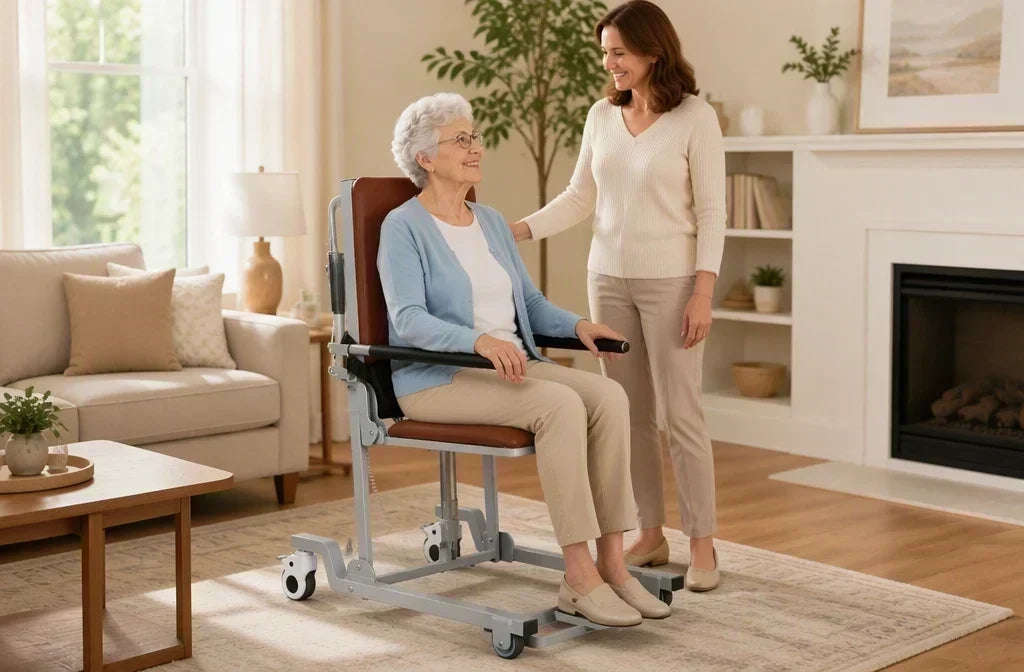
For families who regularly care for someone with limited mobility, preparing in advance can make these moments easier to manage. The WHLICKS Electric Floor Lift Chair is designed to raise a user gradually from near floor level to a comfortable seated height, reducing the need for caregivers to perform a difficult manual lift.
This guide explains what to do after a fall, why lifting by hand can be challenging, and how a floor lift for elderly family members may support a calmer home-care routine.

1. What to Do Immediately After a Fall
The first instinct may be to pull the person up as quickly as possible. However, it is better to pause and make sure they feel well enough to move.
Ask them to remain still for a moment and speak in a reassuring voice. Simple questions can help you understand the situation:
- Are you in pain?
- Did you hit your head?
- Do you feel dizzy?
- Can you move your arms and legs comfortably?
- Do you remember how you fell?
You do not need to make a medical judgment yourself. You are simply checking whether it appears reasonable to continue helping or whether professional assistance may be needed.
If the person is in significant pain, appears confused, cannot move normally, or may be injured, do not attempt to lift them. Contact emergency services or a healthcare professional.
If they are alert, comfortable, and able to move, give them time to recover from the surprise of the fall. Avoid making them feel rushed or embarrassed. A calm conversation can help them feel more secure before the next step.
A simple after-fall checklist
Before attempting to move the person, check the following:
- The person is awake and responding normally.
- They are not reporting significant pain.
- They can move comfortably.
- The surrounding floor is clear.
- You have enough room to position any equipment.
- You feel physically able to provide assistance.
- Additional help is available if needed.
If you are uncertain about any of these points, pause and ask for professional support.

2. Why Manual Lifting Can Be Difficult for Caregivers
Helping someone rise from floor level is very different from helping them stand from a regular chair.
The caregiver must bend low, support the person’s weight, and maintain balance at the same time. The older adult may also feel weak, frightened, or unable to participate fully in the movement.
Common reactions such as pulling on the arms, lifting under the shoulders, or asking the person to hold onto the caregiver’s neck can create an unstable situation. If either person loses balance, both may fall.
Manual lifting can also place unnecessary pressure on the caregiver’s back, shoulders, and knees. This is particularly important for spouses or adult children who provide assistance every day. One difficult lift may lead to discomfort that affects other caregiving tasks.
The safest choice is not always the fastest one. If the movement feels too heavy or difficult to control, stop rather than trying to complete it through strength alone.
Families who assist with several types of daily movement can also explore the wider range of patient lifts and home-transfer solutions available for different mobility needs.
3. How an Electric Floor Lift Chair Can Help
An electric floor lift chair is designed to help raise someone from near floor level into a supported seated position.
It is different from a powered recliner. A recliner-style lift chair begins at normal seat height and helps a person move toward standing. A lift chair from floor level begins much lower and is intended for situations where someone is already on the ground.
Once the user is comfortably positioned on the seat, the electric mechanism raises the chair gradually. The caregiver can remain beside the person, monitor their comfort, and guide the process without carrying their full weight.
The WHLICKS floor lift for elderly users combines a low starting position with a padded seat, tall backrest, supportive armrests, and a mobile base. Its chair-style design may feel more familiar and reassuring than an exposed lifting platform.
How it supports the user
The user remains seated while being raised. This can feel more stable than being pulled upward manually. The backrest provides support, while the armrests give the person a comfortable place to rest their arms.
Because the movement is gradual, the user has time to adjust. If they feel uncomfortable or need a moment, the caregiver can pause instead of completing the entire lift in one motion.
How it supports the caregiver
The electric lifting function provides the upward movement. The caregiver can focus on positioning, reassurance, and supervision rather than attempting to generate the lifting force themselves.
This makes a caregiver lifting aid useful not only for the person receiving care but also for the family member who helps them every day.
When it may be helpful
A floor lift chair may be considered for someone who:
- Has difficulty rising from low positions
- Has reduced leg strength or balance
- Uses a wheelchair, walker, or other mobility aid
- Has experienced previous falls
- Lives with an older spouse or family caregiver
- Feels anxious about being unable to get up
- Needs additional support during low-level transfers
A floor lift is not a replacement for emergency help or individual medical advice. It is a practical home-care tool for situations where it is appropriate to move the person.

4. How to Use a Floor Lift Chair Step by Step
Every caregiver should read the product manual and become familiar with the controls before the chair is needed. Practicing with an empty chair can make a real situation feel less stressful.
The following steps provide a general overview.
Step 1: Check that the person can be moved
Ask how the person feels and look for any reason to seek professional assistance. If you are unsure, do not continue with the transfer.
Step 2: Clear the area
Move rugs, cords, small furniture, and other obstacles away. Make sure the chair has enough space to approach the person and operate without touching nearby objects.
Step 3: Lower and position the chair
Bring the seat close to floor level and move the chair near the user. Explain what you are doing before making each movement.
Step 4: Help the person onto the seat
Assist the user onto the seat only if it can be done comfortably. Some people may be able to reposition themselves with guidance, while others may need help from a second caregiver.
Never drag or force someone into position.
Step 5: Check the seated position
Before raising the chair, confirm that:
- The user is centered on the seat.
- Their back is supported.
- Their arms and legs are comfortably positioned.
- Clothing is clear of moving components.
- The chair is stable.
- The user feels ready.
Step 6: Raise the chair gradually
Use the electric control to lift the seat slowly. Stay beside the user and continue speaking to them throughout the movement.
If the person feels uncomfortable, stop and allow them to rest.
Step 7: Pause at a comfortable height
Once the chair reaches a suitable height, do not immediately ask the user to stand. Give them time to regain confidence and balance.
Depending on their mobility, they may remain seated or receive further assistance transferring to a wheelchair, bed, sofa, or another supportive surface.
The WHLICKS Electric Floor Lift Chair can be incorporated into a wider home-transfer plan alongside other transfer aids for seniors and caregivers.

5. Is a Floor Lift Chair Right for Your Home?
The best mobility equipment should suit the user, the caregiver, and the home environment.
Before choosing a patient lift for home use, consider where it will be stored, where it is most likely to be needed, and how much assistance the user requires.
| What to consider | Questions to ask |
|---|---|
| User mobility | Can the person sit upright and follow simple instructions? |
| Caregiver needs | Can the caregiver position and operate the chair comfortably? |
| Available space | Is there enough room around beds, sofas, and hallways? |
| Seat support | Does the user need a padded seat, backrest, and arm support? |
| Weight capacity | Is the product suitable for the intended user? |
| Storage | Can the chair be kept somewhere easy to reach? |
| Daily care routine | Will it complement other mobility and transfer equipment? |
The device should not be hidden behind boxes or stored in a difficult-to-reach room. If a fall occurs, the caregiver should be able to access it without moving heavy objects first.
It is also helpful for every regular caregiver to understand how the chair works. If only one person knows how to use it, the equipment may not be available when that person is away.
For families looking for a supported and powered solution, the WHLICKS Electric Floor Lift Chair for home care can be reviewed alongside other mobility equipment before making a decision.

6. Creating a Safer Home-Care Routine
A floor lift chair helps after a fall, but a complete plan should also make everyday movement around the home easier.
Walk through the rooms the older adult uses most often. Look for loose rugs, electrical cords, small furniture, cluttered walkways, slippery areas, or poor lighting.
Frequently used items should be within comfortable reach. Walking aids should be stored nearby rather than across the room. The person should not need to climb, stretch, or walk through clutter to reach everyday belongings.
A simple home plan may include:
- Keeping emergency phone numbers in an obvious place
- Making sure a phone or alert device is within reach
- Storing the floor lift in an accessible location
- Teaching regular caregivers how to operate it
- Identifying someone who can provide extra help
- Reviewing the home for common obstacles
- Checking the equipment regularly
- Discussing repeated falls with an appropriate professional
Preparation can also reduce anxiety. An older adult may feel more confident knowing that their family has a plan and will not need to improvise a difficult manual lift.
The goal is not to make the home feel clinical. It is to create a comfortable environment in which daily movement is easier and help is available when needed.

7. Frequently Asked Questions
What is the difference between a floor lift chair and a regular lift chair?
A regular lift chair usually begins at normal seat height and helps a seated person move toward standing. A floor lift chair lowers much closer to the ground and helps raise someone from floor level to a seated height.
Can one caregiver operate a floor lift chair?
This depends on the user’s mobility and the situation. Some users may be able to participate in positioning, while others may require a second caregiver. Never attempt a movement that feels difficult to control.
Can a floor lift chair prevent falls?
No. It is intended to assist with recovery or low-level transfers. Clear walkways, suitable mobility aids, good lighting, and an organized home can help make everyday movement easier.
Should the chair be used after every fall?
Not automatically. First check how the person feels. If they appear injured, confused, or in significant pain, seek professional assistance before moving them.
Where should the chair be stored?
Keep it close to the areas where it is most likely to be needed and make sure caregivers can access it quickly. Avoid placing it behind heavy furniture or in a crowded storage area.
8. Related Reading
To learn more about choosing suitable transfer equipment and protecting caregivers during everyday routines, read:
- How to Reduce Caregiver Back Strain During Daily Transfers
- Sit-to-Stand Lift vs. Patient Lift: Differences and Buying Guide
Preparing for a fall does not mean expecting the worst. It means making sure that, if help is needed, the older adult can be supported in a calm and dignified way.
The right equipment, a clear home-care plan, and caregivers who understand what to do can make an unexpected situation easier for everyone.
Share:
Why Electric Patient Lifts Are Essential for Long-Term Bedridden Patient Home Care