

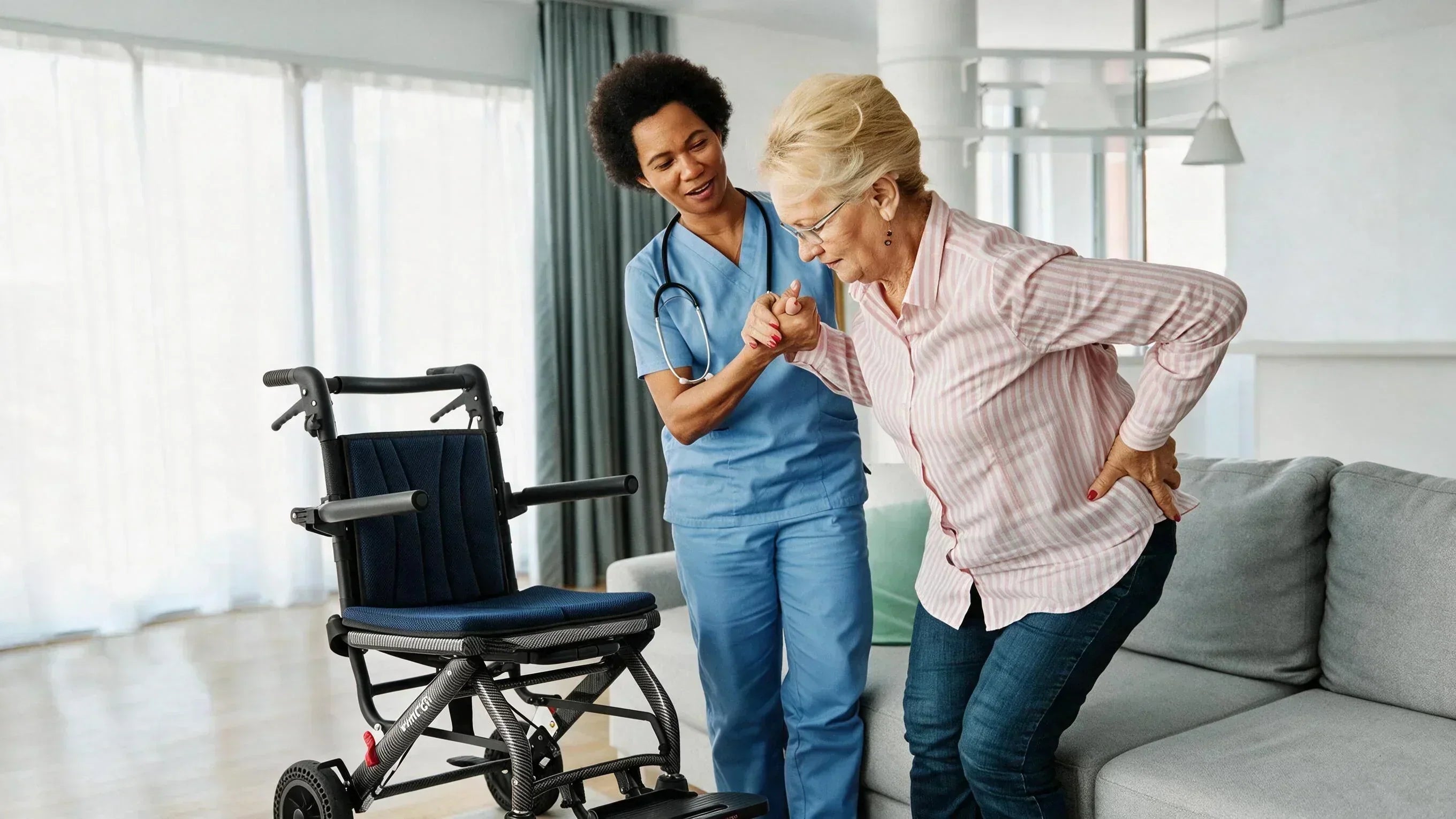
Caring for an aging parent, spouse, or loved one is one of the most meaningful acts of love. But it can also be physically and emotionally demanding.
If you have ever felt your lower back strain while helping a loved one stand from a sofa, get out of bed, or transfer into a wheelchair, you are not alone.
Family caregivers often provide physical support throughout the day. Repeated bending, lifting, twisting, and repositioning can gradually lead to physical fatigue and discomfort.
The good news is that caregiving does not have to mean carrying the entire physical burden yourself. Proper transfer equipment can help reduce manual lifting, support more controlled transfers, and make everyday caregiving more manageable.
Taking care of yourself is not selfish. Reducing unnecessary physical strain can help you preserve the energy and patience you need to care for the person you love.
Why Daily Transfers Can Be Physically Demanding
Caregiver strain rarely comes from one single movement. It often develops through repeated physical tasks performed throughout the day.
When a loved one has limited mobility, caregivers may need to help with standing, sitting, getting into bed, moving to a wheelchair, or preparing for bathing.
Repeated Manual Lifting
Supporting another person's body weight while bending or reaching can place significant stress on your back and other muscles.
Over time, repeated lifting and awkward movements may contribute to muscle fatigue, soreness, and discomfort.
The Fear of Slips and Falls
Manual transfers can also create stress for both the caregiver and the person receiving care.
You may constantly wonder:
-
What if their knees give out?
-
What if they lose their balance?
-
What if I cannot support them safely?
This tension can make routine transfers feel more difficult than they need to be.

Physical Strain Can Affect Emotional Well-Being
When physical fatigue builds up, caregivers may also experience frustration, stress, or reduced patience.
That combination of physical and emotional exhaustion can contribute to caregiver burnout.
How Transfer Equipment Can Help Reduce Physical Strain
Using appropriate transfer equipment is not about stepping away from caregiving. It is about making caregiving more sustainable.
Properly selected mobility and transfer aids can help reduce the amount of manual lifting required while providing additional support during everyday movements.

Manual Lifting vs. Transfer Assistance
| Manual Lifting — Straining Alone | Transfer Assistance — Working Together |
|---|---|
| Heavy pressure on your lower back | Helps reduce manual lifting |
| Constant worry about slips and falls | Supports more controlled transfers |
| Awkward, exhausting daily movements | Can provide additional stability and support |
| Physical exhaustion over time | Helps caregivers conserve energy for meaningful moments |
1. Reduce the Physical Effort of Standing Transfers
For loved ones who still have some ability to bear weight through their legs, a sit-to-stand lift can provide additional support when moving from a bed, sofa, or toilet.
Supportive knee positioning and a stable transfer surface can help create a more controlled standing transfer while reducing the amount of physical effort required from the caregiver.
Instead of relying entirely on your arms and back, you can use the equipment to provide structured assistance throughout the movement.
2. Support More Comfortable Transfers
For individuals who need greater assistance, an electric patient lift transfer chair can provide powered support during everyday transfers.
This type of equipment can be useful for situations such as moving between rooms or preparing for bathing.
The goal is not simply to move someone from one place to another. A well-designed transfer aid can also help create a more stable and comfortable experience for the person receiving care.
3. Create a More Controlled Home-Care Routine
Features such as safety belts, supportive knee pads, and lockable wheels can provide additional stability during transfers.
These features can help reduce sudden movements and make positioning more predictable for both the caregiver and the user.
However, transfer equipment should always be selected according to the user's mobility level and used according to the manufacturer's instructions.
Finding the Right Helping Hand for Your Home
Every family's caregiving needs are different. The right solution depends on the person's mobility, strength, transfer needs, and home environment.
| Transfer Aid | Ideal For | How It Can Help |
|---|---|---|
| Manual Sit-to-Stand Lift | Seniors with some leg strength who need support when rising from beds, sofas, or toilets. | Encourages gentle weight-bearing while padded knee rests and a supportive transfer surface can improve comfort during transfers. |
| Electric Patient Lift Chair | Loved ones who need powered assistance for bathing and room-to-room transfers. | Provides powered lifting support and can make everyday transfers more manageable. |
| Transfer & Mobility Bundle | Families looking for a more complete home-care and mobility solution. | Combines an ergonomic lift with a lightweight manual wheelchair to support different mobility needs at home and outside. |
Manual Sit-to-Stand Lifts

For seniors who still have some leg strength but need additional support standing from a bed, sofa, or toilet, a WHLICKS Sit-to-Stand Lift can provide structured assistance during standing transfers.
Electric Patient Lift Chairs
For loved ones who require greater assistance, the WHLICKS Electric Patient Lift Transfer Chair provides powered support designed to make transfers more manageable.
Transfer & Mobility Bundles
For families who need both transfer assistance and everyday mobility support, the WHLICKS Sit-to-Stand Lift & Premium Manual Wheelchair Bundle combines transfer assistance with manual wheelchair mobility for different parts of the daily routine.

Simple Ways to Make Caregiving More Sustainable
Transfer equipment is only one part of a healthier caregiving routine. Small changes in how you approach daily care can also make a difference.
Take Your Time
Caregiving is not a race. Give yourself and your loved one enough time to position the equipment properly before beginning a transfer.
Pay Attention to Physical Discomfort
If you regularly experience back or muscle discomfort while helping with transfers, consider whether additional support or equipment could reduce the physical demands of the task.
Do not ignore persistent pain. If you are experiencing ongoing or severe pain, consult an appropriate healthcare professional.
Ask for Support
You do not have to handle every part of caregiving alone.
Support may come from specialized equipment, another family member, a professional caregiver, or simply taking time to rest.
Asking for help is not a weakness. It is part of creating a sustainable caregiving routine.
Frequently Asked Questions
Can transfer equipment help reduce caregiver strain?
Yes. Properly selected transfer equipment can help reduce the amount of manual lifting and physical effort required during everyday transfers.
Who may benefit from a sit-to-stand lift?
A sit-to-stand lift may be suitable for individuals who retain some ability to bear weight through their legs but need additional support when standing or transferring.
When should a caregiver consider a patient lift?
A patient lift may be appropriate when a person has limited ability to stand or requires greater assistance during transfers. The appropriate equipment should be selected according to the individual's mobility needs.
Can transfer equipment be used at home?
Many transfer aids are designed for home-care environments. Before using any equipment, caregivers should follow the manufacturer's instructions and make sure the equipment is appropriate for the user's needs and home environment.
Care With Comfort, Love With Ease
Caregiving is an act of love, but it should not require you to carry the entire physical burden alone.
By using appropriate transfer equipment, you can help reduce unnecessary physical strain, support your loved one's comfort and dignity, and create a more manageable daily routine.
The goal is not to do less for the person you love.
It is to make caregiving easier, safer, and more sustainable for both of you.

Make Everyday Transfers Easier
Explore WHLICKS Sit-to-Stand & Patient Lifts to discover transfer solutions designed to support caregivers and loved ones throughout everyday home care.
Share:
How to Choose the Best Walking Cane for Seniors: Single Cane vs Quad Cane Guide
The Ultimate 2026 Guide to Walking Canes & Mobility Aids: Single-Tip vs. Quad Cane vs. Sit-to-Stand Assist