

A wheelchair can look compact online and still be awkward to load into your car. For everyday outings, the right choice depends on three things: who will operate it, what you will lift, and how much storage space you have.
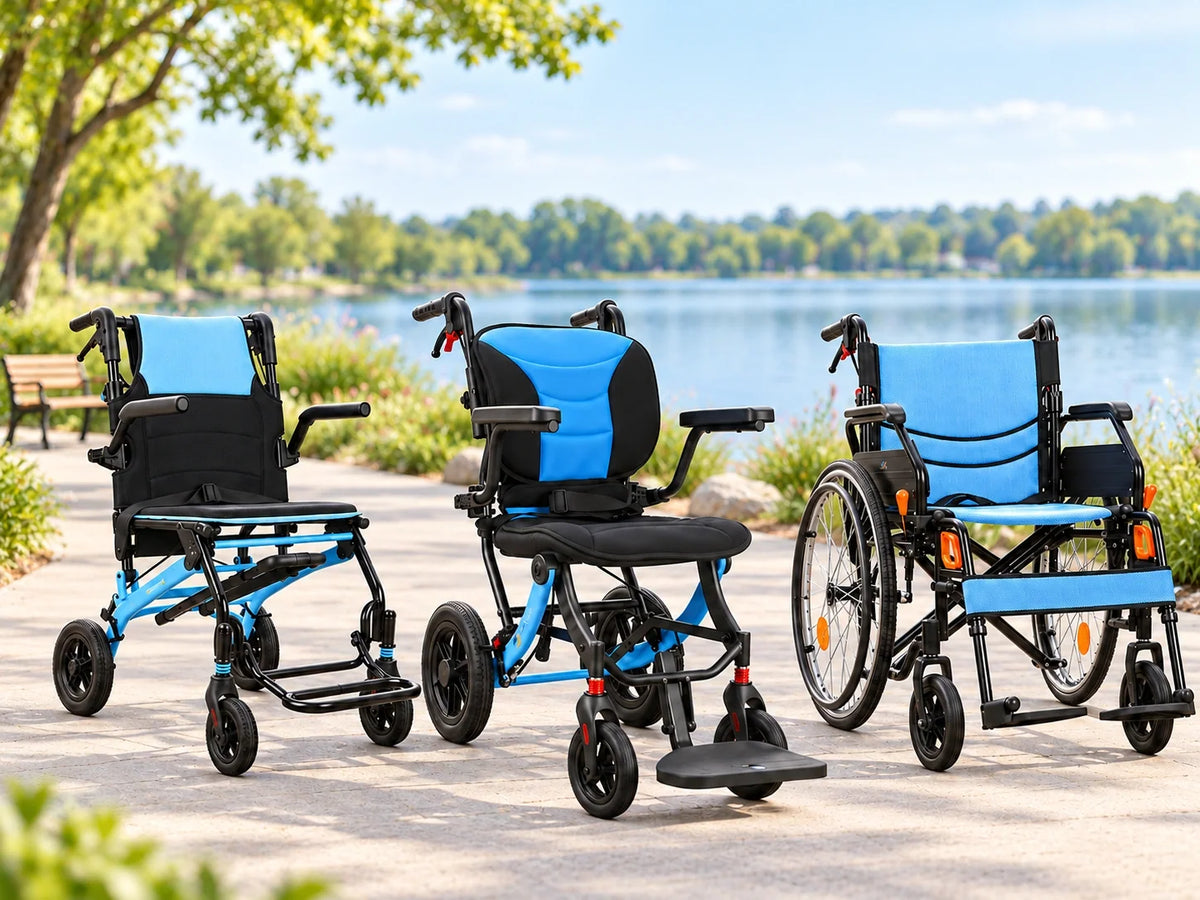
This guide compares three WHLICKS folding wheelchairs—from companion-pushed transport chairs to a manual model with removable rear wheels—to help you choose features that fit your routine.
Which Wheelchair Features Matter Most for Your Outings?
Start with a typical trip rather than a long list of specifications. Picture leaving home, loading the car, arriving at your destination, and putting everything away afterward.
Will a companion push the chair throughout the outing? Will the seated person use hand rims to move themselves? Do you prefer folding the chair as one unit, or does removing the rear wheels suit your loading routine?

These questions help narrow your options before you compare individual models.
| Wheelchair | Consider it if… | What to check |
|---|---|---|
| Ergonomic Adult Transport Wheelchair | A companion will push, and removable cushions are a priority | Seat fit, folded dimensions, and lifting weight |
| Transport Wheelchair with Telescopic Handle | You frequently move the chair while it is folded | Selected edition, pull-handle operation, and car fit |
| Manual Wheelchair with Quick-Release Rear Wheels | Self-propelling is part of the plan, and removable wheels suit your routine | Complete weight, component weights, and wheel storage |
There is no single best lightweight wheelchair for every outing. The useful comparison is how each design handles the tasks you repeat most often.

Three WHLICKS Folding Wheelchairs to Consider
Ergonomic Adult Transport Wheelchair: For Companion-Pushed Trips
For shopping, appointments, and family visits with a companion, the WHLICKS Ergonomic Adult Transport Wheelchair brings together a contoured backrest, removable cushions, and a folding design.
The S-shaped backrest and adjustable footrest features are worth comparing when setting up the chair. Removable seat and back cushions also make routine cleaning more convenient; follow the supplied care instructions.
The product description lists a weight of 23.1 lb, a 300 lb weight capacity, and folded dimensions of 20 × 11 × 26 inches. Use those measurements as a starting point for checking your storage space.
Consider this option if: a companion will handle pushing and you value removable cushions alongside a compact fold.
Transport Wheelchair With Telescopic Handle: For Moving the Folded Chair
Packing for an outing involves more than lifting a chair into a trunk. You may also need to move it through a parking area or building entrance before it is unfolded.
The WHLICKS Transport Wheelchair with Telescopic Handle includes a retractable handle for pulling the folded chair on suitable surfaces. Rotating armrests and foldable footrests provide additional positioning and storage features.
The pull handle does not eliminate vehicle lifting. Think of it as one part of the packing routine, rather than a replacement for checking the chair’s weight.
The listing includes different editions, so confirm the exact weight, seat dimensions, and folded size for the version you select.
Consider this option if: moving the folded chair between locations is a frequent part of your day.
Manual Wheelchair With Quick-Release Wheels: For Self-Propelled Use
If self-propelling is part of the plan, the WHLICKS Manual Wheelchair for Adults offers 24-inch rear wheels with hand rims, a folding frame, and removable rear wheels.
Quick-release wheels provide another way to organize vehicle storage. You can load the chair and wheels separately, provided that arrangement suits the person handling them.
Pay attention to the weight description: 17 lb refers to the frame, while the specification section lists an item weight of 38.8 lb. The frame figure should not be treated as the complete wheelchair weight or the confirmed weight after simply removing its rear wheels.
Consider this option if: self-propelled operation matters and you are comfortable with separate wheel storage and reinstallation.
Will a Folding Wheelchair Fit in Your Car?
Folding dimensions are only half the answer. The chair must pass through the vehicle opening before it can use the space inside.
Measure the opening and usable interior
Record:
- Opening width and height: Measure the narrowest usable points.
- Interior depth: Account for hinges, wheel wells, and sloping glass.
- Space for other items: Include groceries, luggage, and removed wheelchair parts.
A cardboard outline based on the folded measurements can help you visualize the space required, although it cannot confirm how the chair will handle during loading.
Also consider the cargo lip. Placing a chair into a low trunk is different from lifting it into a higher vehicle. Check what the person doing the loading will actually need to lift and where they can hold the folded chair.
For these trips, plan to stow the wheelchair and use the vehicle’s seating and restraint system. Do not assume a folding wheelchair is approved for occupied vehicle transport.

Compare Weight in the Configuration You Will Carry
A lower advertised number is useful only when you know what it includes.
Wheelchair listings may describe the complete chair, a bare frame, or a configuration with specific components removed. Compare equivalent configurations and ask which parts are included.
Then consider the whole process. A chair that folds as one unit may involve fewer setup steps. Removable wheels create separate items to carry and store, but may suit some loading arrangements better.
The practical question is: what will you lift, carry, and reassemble on an ordinary outing?
Check Seating Fit and Everyday Access
Do not choose a narrower seat simply to save trunk space. Seat width, seat depth, and footrest positioning need to suit the seated person.
Overall wheelchair width is a separate measurement. Use it to check doorways and other narrow spaces along your usual route.
Think about destinations as well as home storage. Restaurants may have closely spaced tables, while family homes may have tight entrances. Review the model’s intended-use instructions for the surfaces and conditions you expect.
Our home preparation checklist offers additional ideas for organizing everyday space.
Before You Order
Confirm these five details:
- Who will push or operate the chair.
- Seat dimensions and stated weight capacity.
- Complete weight and the components you will lift.
- Folded measurements compared with your vehicle.
- Folding, brake, and wheel-attachment instructions.
If you are still deciding between companion-pushed and self-propelled designs, read our transport wheelchair vs. regular wheelchair guide.

Frequently Asked Questions
Can a transport wheelchair be self-propelled?
The two transport models featured here are designed for a companion to push. For self-propelled use, compare a manual wheelchair with large rear wheels and hand rims.
Is seat width the same as overall wheelchair width?
No. Seat width describes the seating area. Overall width includes the wider structure, such as the wheels, and is the measurement to compare with doorways.
Does a telescopic handle mean I will not need to lift the chair?
No. It helps you pull the folded chair on suitable surfaces. Loading a vehicle may still require lifting.
Are quick-release wheels useful for car trips?
They allow the rear wheels to be removed for storage and loading. Consider the remaining assembly weight, separate wheel storage, and the steps needed to reinstall them correctly.
Find the Features That Fit Your Routine
For companion-pushed outings with removable cushions, explore the Ergonomic Adult Transport Wheelchair. For frequent movement while folded, compare the Telescopic-Handle Transport Wheelchair. For self-propelled use and removable rear wheels, review the Quick-Release Manual Wheelchair.
Before choosing, match the selected configuration to your seating requirements, vehicle measurements, and loading routine. Those practical details matter more than the word “lightweight” alone.
Share:
Electric Chair Lift Assist: A Guide to Easier Standing at Home