

By the WHLICKS Mobility Research & Product Testing Team
(5+ years evaluating mobility aids, accessibility equipment, and user ergonomics)
Introduction: Why Mobility Challenges Matter More Than Ever
Mobility is not only about walking from one place to another — it is intertwined with independence, dignity, and the ability to participate fully in daily life. According to recent U.S. Census Bureau data (2024), approximately 13.7% of American adults report mobility disabilities, making it the largest disability category in the country. This aligns with findings from the World Health Organization (WHO), which estimates that one in three adults aged 60+ experiences difficulty with mobility, including walking, balance, and endurance limitations.
At WHLICKS, our mobility research team has spent over five years testing, reviewing, and documenting the real-world performance of more than 80 mobility devices — from transport wheelchairs to rollators, walkers, and hybrid supports. Across hundreds of user interviews and field tests, one trend is clear:
Mobility challenges rarely occur suddenly; they typically arise gradually and affect not just physical ability, but emotional wellbeing and social participation.
Transport wheelchairs, in particular, have become a widely used mobility tool because of their balance of portability, ease of use, and caregiver support. But before discussing how they help, it’s important to understand the roots of common mobility challenges.

Common Mobility Challenges: A Research-Backed Overview
Mobility challenges typically stem from a combination of physical, neurological, and environmental factors. Below is a categorized, research-supported breakdown used in clinical and rehabilitation assessments.
Physical Causes of Mobility Limitations
Musculoskeletal Conditions
- Arthritis affects 58.5 million adults in the U.S. (CDC, 2024).
Pain, stiffness, and joint degradation—especially in the knees and hips—make standing or walking painful. - Sarcopenia and age-related muscle decline
People lose 3–8% of muscle mass per decade after age 30, accelerating after 60 (NIH).
Reduced strength translates into instability and fatigue.
Post-Injury or Post-Surgical Recovery
- Hip fractures, knee replacements, and spinal surgery often result in temporary or long-term mobility restrictions.
- Users commonly experience reduced weight-bearing capacity and require assistive mobility tools during recovery.
Neurological Causes
Neurologic disorders affect gait, balance, coordination, and spatial awareness.
- Stroke survivors: Approximately 40% experience long-term mobility impairment (American Stroke Association).
- Parkinson’s disease: Up to 68% of patients develop gait disturbances such as freezing, shuffling, and instability.
- Multiple sclerosis (MS): Fatigue and lower-limb weakness reduce ambulatory endurance.
Cardiovascular & Respiratory Limitations
Conditions such as heart failure, COPD, or long-term post-COVID symptoms reduce endurance.
Users report:
- Short walking distances before fatigue
- Difficulty standing for more than a few minutes
- Uncertainty about balance when oxygen or circulation feels compromised
Environmental & Safety Challenges
Even individuals with mild impairments face risk from:
- Unsafe sidewalks
- Slippery floors
- Long walking distances in hospitals, malls, or airports
- Lack of resting points in public spaces
Mobility challenges are not simply “walking problems”—they represent a broader functional limitation affecting independence and participation.
Why Transport Wheelchairs Are Often the Most Practical Solution
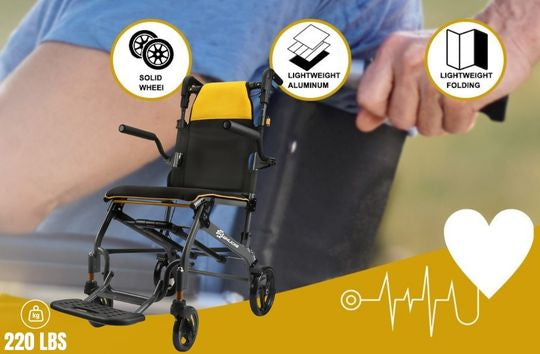
Transport wheelchairs (also known as “companion chairs”) are designed for short- to moderate-distance mobility with caregiver assistance. Based on WHLICKS field testing, they consistently stand out for:
- Light weight (typically 14–23 lbs)
- Compact folding frames
- Ease of loading into cars or public transport
- Simple maneuverability in tight spaces
- Low caregiver strain compared with standard wheelchairs
Unlike self-propelled wheelchairs, transport wheelchairs prioritize portability and short-distance support. For a more detailed overview, see our guide on the benefits of transport wheelchair for seniors.
A Practical Framework: The “Mobility Buffer” Model
Through years of WHLICKS testing and user interviews, we developed a practical concept called the Mobility Buffer — the margin between a user’s actual physical capacity and the physical effort required in their daily environment.
A transport wheelchair is most helpful when:
A user’s physical ability < the physical demand of their routine tasks
For example:
| Scenario | Physical Demand | User Ability | Outcome |
|---|---|---|---|
| A 15-minute walk to a clinic | Medium | Low | Wheelchair recommended |
| Crossing an airport terminal | High | Medium | Wheelchair prevents fatigue/collapse |
| Household movement only | Low | Medium | Wheelchair not required |
This model helps caregivers understand the why behind mobility aid selection.
When a Transport Wheelchair Helps Most: Case-Based Insights
WHLICKS research includes structured field tests, simulated usage environments, and interviews. Here are composite case examples derived from common mobility patterns:
Case 1: Post-Surgery Recovery (Hip or Knee Replacement)
- Challenge: Limited weight-bearing; risk of re-injury during the recovery phase (6–12 weeks).
- Mobility Buffer Insight: Daily tasks in public spaces exceed patient walking capacity.
- Outcome: Transport wheelchair supports safe medical visits, shopping, and essential outings.
Case 2: Early-Stage Neurodegenerative Conditions (e.g., Parkinson’s)
- Challenge: Sudden freezing episodes, uneven gait, fatigue.
- Insight: Reduces fall risk during unpredictable gait disturbances.
- Outcome: Caregivers report higher confidence during outdoor mobility.
Case 3: Older Adults with Mild Strength Loss
- Challenge: Fine for short indoor distances but fatigued outdoors.
- Insight: Conserves energy for meaningful activities rather than long approaches.
- Outcome: Enhances participation in family gatherings, travel, and community activities.
Key Features to Evaluate When Choosing a Transport Wheelchair
WHLICKS testing uses a standardized checklist, adapted below for consumer use:
Essential Safety & Comfort Features
✔ Dual-locking brakes
✔ Padded, ergonomic armrests
✔ Adjustable footrests with heel loops
✔ Crash-tested frame integrity (look for ISO 7176)
Practical Performance Features
✔ Total weight under 23 lbs for caregiver portability
✔ Foldability and quick-release mechanisms
✔ Seat width: 17–19 inches for most users; 20–22 inches for bariatric users
✔ Maneuverability in narrow hallways and doorways
Caregiver-Friendly Features
✔ Easy-grip push handles
✔ Back pocket or storage pouch
✔ Smooth casters for indoor surfaces
✔ Durable tires for outdoor irregular terrain

Safety Guidelines & Etiquette: For Users and Caregivers
Transport wheelchair etiquette is an under-discussed but important part of mobility safety.
User Safety
- Always lock brakes before sitting or standing.
- Keep feet on footrests during movement.
- Avoid leaning far forward or sideways.
Caregiver Safety
- Use both hands to push.
- Avoid sudden turns on slopes.
- Do not lift the wheelchair with the user seated unless the device is rated for it.
Social Etiquette
- Ask before touching or adjusting the user’s chair.
- Let the user choose direction unless safety is compromised.
- Maintain respectful eye contact and communicate steps clearly.
Troubleshooting & Adaptations for Special Needs
For Outdoor Terrain
- Choose larger rear wheels or pneumatic tires.
- Slow down on gravel, grass, and uneven pavement.
For Car Transport
- Use the two-step fold (footrests → frame).
- Lift using the reinforced crossbar, not the armrests.
For Users with Poor Trunk Control
- Add optional chest straps or lateral supports.
- Choose a model with an adjustable seat belt.
Frequently Asked Questions
What do wheelchair users struggle with?
Many wheelchair users struggle with mobility limitations, uneven terrain, fatigue, and difficulty navigating long distances independently. Proper wheelchair transport, whether it’s safely folding and loading a transport chair into a car or using wheelchair-accessible transport services, helps reduce fatigue and improve safety during outings.
What's the difference between a transport chair and a wheelchair?
A transport chair (transport wheelchair) is designed for caregiver-assisted mobility over short to moderate distances. Users cannot self-propel it. A standard wheelchair, in contrast, can be self-propelled by the user and is usually sturdier for longer distances, daily use, or outdoor terrain.
What is the purpose of a transport wheelchair?
A transport wheelchair is designed for short-distance travel and caregiver-assisted mobility, offering a lightweight and easy-to-fold option for outings and medical visits.
Is a transport wheelchair the same as a regular wheelchair?
No. Transport wheelchairs are designed for caregiver pushing, not self-propulsion.
Can a transport wheelchair be used every day?
Yes, for short- to moderate-distance movement. For full-time daily use, a standard wheelchair may be more appropriate.
Are transport wheelchairs covered by insurance?
Many insurers cover them with a physician’s recommendation. Check your plan’s durable medical equipment (DME) policy.
How much does a transport wheelchair weigh?
Most transport wheelchairs weigh 15–25 lbs, depending on frame material and design. The WHLICKS transport wheelchair weighs just 19.4 lbs, making it lightweight and easy to handle.
What is the weight limit for most transport wheelchairs?
Most support 200–300 lbs; bariatric models support 350–450 lbs. Always verify manufacturer’s specifications.
How much does a transport wheelchair cost?
Transport wheelchairs typically cost $100–$300, depending on features, build quality, and brand.
Conclusion: A Practical Path Toward Independence
Mobility challenges affect millions of people, yet the right tools — thoughtfully chosen and safely used — can restore independence and expand participation in daily life. A transport wheelchair is not a symbol of decline, but a practical mobility support tool that balances safety, dignity, and opportunity.
At WHLICKS, our research team advocates for mobility solutions that empower users without promising medical outcomes. The goal is always the same: more freedom, more connection, and more confidence in motion.
References (Authoritative Sources Used)
- U.S. Census Bureau, Disability Statistics (2024)
- WHO World Report on Ageing and Health (2023)
- CDC Arthritis Program, Prevalence Data (2024)
- National Institutes of Health – Sarcopenia Research Review (2021–2023)
- American Stroke Association Mobility Outcomes Report
- Parkinson’s Foundation Gait & Balance Statistics
Share:
Understanding the Benefits of a Transport Wheelchair for Seniors
How to Choose the Right Wheelchair for Daily Use