

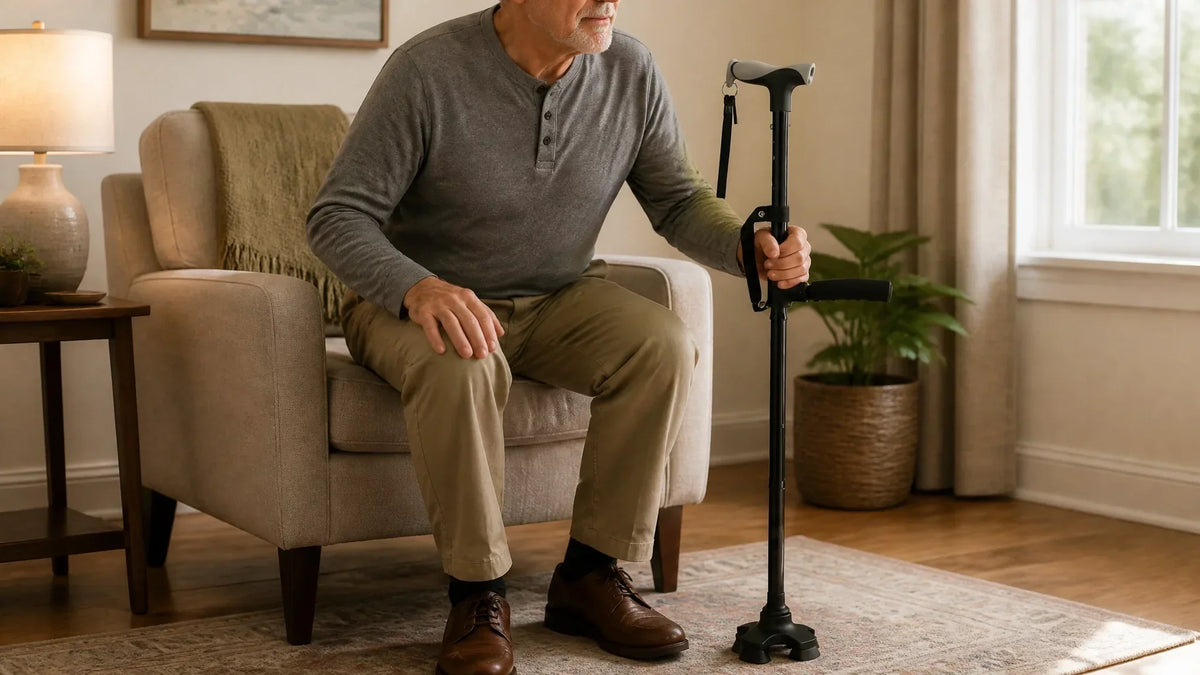
A walk around the house rarely starts with walking. First, there is the moment of getting up from the sofa, turning toward the hallway, reaching for a cane, and finding a comfortable rhythm. Later, the same sequence happens in reverse when it is time to sit down. These short transitions can shape how someone feels about moving through their day.
A foldable walking cane with standing assist brings two useful ideas together: a walking aid that is easy to bring along and an additional hand position to consider when rising from a seat. For someone who still walks independently but wants a little more thought put into those everyday moments, that combination may be worth exploring. The WHLICKS foldable walking cane with standing assist is one option to look at as you think through your routine.
The right choice depends on the person, the environment, and the amount of support needed. This guide walks through the small decisions that matter before, during, and after a walk, so you can choose with more confidence.

1. Why the First Few Seconds Matter
Imagine finishing breakfast and deciding to walk to the front door. Before the first step, you need to bring your feet into a useful position, shift your weight forward, stand, find your balance, and begin moving.
A standard cane is primarily used while walking. A cane with an additional assist handle gives you another place to position your hand during the move from sitting to standing. It does mean you can consider the standing transition as part of your cane choice, instead of focusing only on the walk that follows.
Think about the surfaces and seating you use most often. An upholstered sofa can feel different from a firm dining chair. A cane may feel comfortable during a straight walk yet awkward if there is no room to position it beside your seat. Looking at the whole sequence helps you spot what is actually difficult: rising, getting balanced, walking, turning, or sitting again.
If rising requires another person to lift you, or if you often feel unable to bear weight safely, speak with a qualified clinician about a suitable aid and transfer technique. A portable cane should match your abilities, rather than be asked to do the work of a different device.

2. What to Look for in a Standing Assist Cane
The first feature to examine is the handle arrangement. A main grip is for your usual walking position; a second, lower hand position is intended to offer another option while rising. Check the product images to see where each handle sits and whether the spacing looks practical for your body and the chairs you use. Grip comfort matters just as much as the number of handles: you should be able to hold the cane without stretching or twisting your wrist into an uncomfortable position.
Next, look at adjustability. Cane height influences how naturally your arm rests at your side while walking. Compare the listed adjustment range with your usual shoes and preferred posture. Confirm that the adjustment mechanism is fully engaged each time you change the height.
Then consider the tip or base. A cane needs dependable contact with the ground beneath it. Check the base before each use, especially after time outdoors or on damp pavement. A worn or damaged tip can change the way a cane feels.
Finally, ask whether folding serves a real purpose in your routine. A foldable cane can be convenient in a car, during a visit, or when you need to put it away between outings. It is still important to open it completely and confirm that every section is secure before walking. The WHLICKS standing assist cane is worth reviewing through this practical lens: handle positions, fit, ground contact, and storage.

3. Picture a Full Day, Not Just a Product Photo
At home. Keep the cane within easy reach of your usual seat without blocking a walkway.
At the door. If the cane was folded for storage, open it fully and check that it is secure before leaving.
On an errand. A pharmacy, café, or family gathering brings unfamiliar seats and more people moving nearby. Take a moment to look at the chair and the space around it before sitting down. When it is time to leave, place the cane where it can be used according to its instructions, and move at a pace that feels controlled. If the route involves stairs, slippery ground, or crowded areas, those conditions may call for extra planning or another kind of support.
Back at home. Check the tip and joints for visible wear or looseness, then store the cane where you can find it easily next time.
For a broader look at the tradeoffs among different designs, see WHLICKS’ guide to walking canes and mobility aids. It can help you decide whether a compact cane, a wider-base cane, or a more substantial mobility aid best matches the situations you encounter.

4. A Simple Checklist Before You Choose
Use this checklist while comparing a foldable walking cane with standing assist with the cane you use now, or with other options. The most helpful feature is the one that addresses a real difficulty in your day.
| Ask yourself | What to check |
|---|---|
| Where do I need support? | Is walking the main concern, or is rising from a seat also difficult? |
| Which seats do I use most? | Think about seat height, firmness, available space, and nearby stable furniture. |
| Does the cane fit me? | Review the adjustable height range, handle position, and how the grip feels in your hand. |
| Will I take it out regularly? | Consider how it folds, where you will carry it, and whether you can open it easily. |
| What surfaces are on my route? | Check flooring, mats, pavement, thresholds, and places that become wet. |
| Can I inspect it routinely? | Look for an intact tip, secure sections, and a properly engaged height adjustment. |
A product page can answer some of these questions; a trial in your usual environment answers others. If you are shopping for a parent or family member, invite them into the decision. Ask which moments feel frustrating and which design details they would actually use. A cane that looks ideal to a caregiver may feel too awkward, heavy, or conspicuous to its intended user.
It can also help to think of the purchase as one part of a larger home routine. Clear pathways, sensible places to leave the cane, and suitable seating all affect how easy it is to move around. If you are unsure how to start that conversation respectfully, WHLICKS has a guide on talking to aging parents about mobility aids.

5. Fit the Cane Into Your Routine
Begin with the instructions supplied with the cane. Open and adjust it on a clear, dry floor, and check that the sections and height setting are secure. Stand naturally and assess whether the main grip is comfortable for your walking posture. Do not assume the correct height from a photograph or from another person's setting.
Practice the ordinary moments you expect to encounter, ideally with a professional's guidance if you are new to using a cane or have concerns about balance. Start with a familiar chair and an uncluttered route. Pay attention to where the cane goes as you rise, turn, walk, and sit. The goal is to understand the sequence before trying it in a crowded restaurant or on an uneven path.
It is equally useful to notice what the cane does not solve. If getting up remains the main obstacle even when the handle position feels comfortable, a change in seating or a different support device may make more sense. If walking longer distances is difficult, a cane's compact size may be less important than the broader support offered by another aid. WHLICKS' walking canes collection can help you compare cane styles, while the larger mobility walking aids collection shows other options for daily movement.

6. Make the Choice About Everyday Freedom
A useful walking aid should fit the ordinary parts of life: crossing the kitchen, visiting a friend, stepping into a store, and returning home. For some people, an extra assist handle and a folding design make those moments more manageable to plan. For others, a different base, a walker, or help with transfers may suit their needs better.
The most honest question is simple: Does this design match the way I move from sitting to standing and then into walking? If the answer appears to be yes, review the photos, instructions, and current product details for the WHLICKS foldable walking cane with standing assist. Use the checklist above to make a choice grounded in your own daily routine.
7. Frequently Asked Questions
Is a standing assist cane different from a regular walking cane?
A regular cane offers a handhold for walking. A standing assist design adds another hand position intended for the transition from a seat to standing. The exact arrangement varies by model, so review the product images and instructions before deciding whether it fits your needs.
Can I use the assist handle to pull myself up from any chair?
Do not assume that every chair or floor setup is suitable. Seat height, stability, available space, and your ability to bear weight all matter. Follow the cane's instructions, and ask a qualified clinician for advice if standing is difficult or uncertain.
Why choose a foldable cane?
Folding can make a cane easier to store or bring along when you are not actively using it. The benefit depends on your routine. Always make sure it is fully opened and secure before walking.
How do I know whether the cane height is right?
Check the adjustment range and follow the manufacturer's fitting instructions. Your posture, shoes, and comfort at the grip all affect the fit. If you are new to a cane or notice discomfort, a physical therapist or other qualified professional can help assess your setup.
Is a cane enough if I struggle to stand without help?
A cane may not provide the level of support needed for someone who cannot rise or bear weight safely. Speak with a qualified clinician about the appropriate mobility or transfer aid for your circumstances.
Share:
How to Talk to Aging Parents About Mobility Aids Without Taking Away Their Independence