

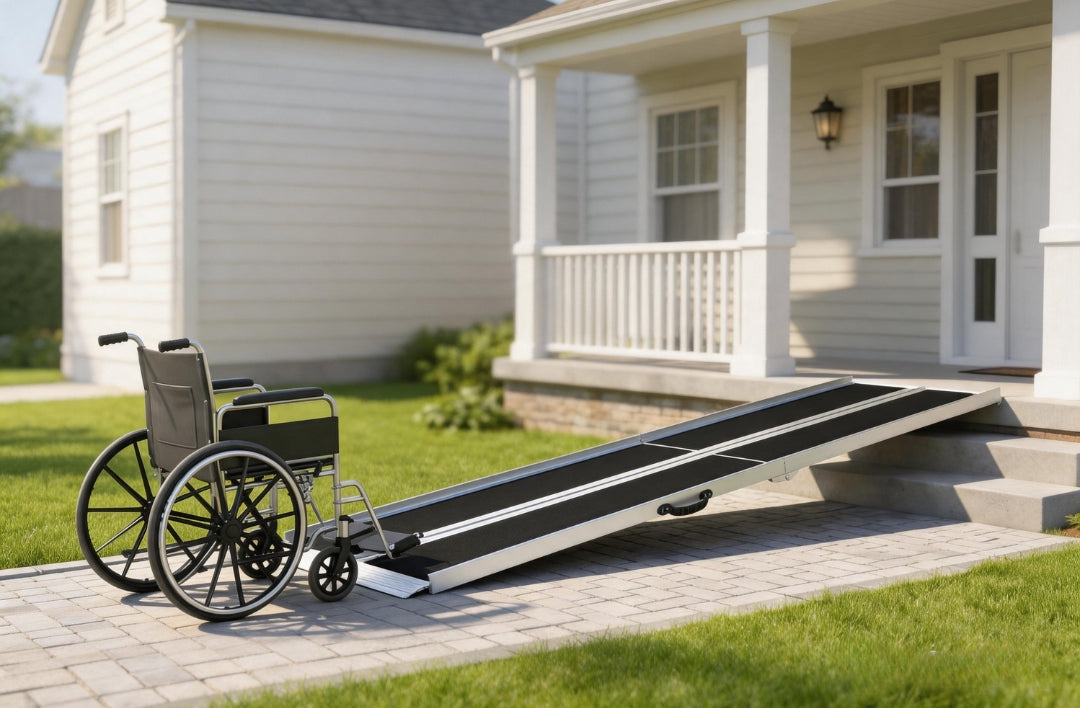
Wheelchair ramps make homes, businesses, and public spaces safer and more accessible for people with mobility challenges. But one of the most common questions homeowners and caregivers ask is: how long should a wheelchair ramp be?
The answer depends on several important factors, including the height of the entrance, the type of wheelchair being used, available space, and ADA accessibility guidelines. A ramp that is too short can become dangerously steep, increasing the risk of falls, tipping, or difficulty climbing.
In this guide, you’ll learn:
- How to calculate wheelchair ramp length
- ADA wheelchair ramp slope requirements
- Recommended ramp lengths for different heights
- Portable vs permanent ramp considerations
- Common wheelchair ramp mistakes to avoid
Whether you’re planning a ramp for a home, porch, garage, business entrance, or vehicle, this guide will help you choose the safest and most practical option.
What Determines the Length of a Wheelchair Ramp?
The length of a wheelchair ramp is primarily determined by two things:
- The vertical rise (height)
- The ramp slope ratio
Ramp Rise (Vertical Height)
The “rise” refers to how high the wheelchair user needs to climb vertically. This could include:
- Front door steps
- Porch entrances
- Garage thresholds
- Deck access
- Commercial building entrances
For example:
- A single step may have a rise of 6–8 inches
- A porch may have a rise of 24 inches
- A deck may have a rise of 30 inches or more
The higher the rise, the longer the ramp must be.
Ramp Slope Ratio
The slope ratio determines how steep the ramp is. According to ADA recommendations, the standard wheelchair ramp slope is 1:12.

This means:
- For every 1 inch of vertical rise
- You need at least 12 inches (1 foot) of ramp length
The basic wheelchair ramp formula is:
Ramp Length = Rise × 12
For example:
- A 6-inch step requires a 6-foot ramp
- A 12-inch rise requires a 12-foot ramp
- A 24-inch porch requires a 24-foot ramp
Longer ramps are generally safer because they reduce steepness and make climbing easier for wheelchair users and caregivers.
Manual vs Electric Wheelchairs
Different mobility devices may require different ramp considerations.
Manual Wheelchairs
The ideal ramp slope may also depend on the type of mobility device being used, including manual and lightweight wheelchairs designed for home and travel use.
Power Wheelchairs
Power wheelchairs can handle steeper ramps more easily, but safety is still important, especially for seniors or outdoor use.
Walkers and Rollators
People using walkers or rollators often need even more gradual slopes to reduce the risk of slipping or losing balance.

ADA Guidelines for Wheelchair Ramp Length
The Americans with Disabilities Act (ADA) provides accessibility standards designed to improve safety and usability.
ADA Recommended Ramp Slope
The standard ADA wheelchair ramp slope is 1:12.
This means:
- 1 inch of rise requires 12 inches of ramp
- 30 inches of rise requires 30 feet of ramp
This slope is considered safe and manageable for most wheelchair users.
Maximum Rise Per Ramp Section
ADA guidelines generally recommend that a single ramp run should not rise more than 30 inches before including a landing platform.
Long ramps should include:
- Resting platforms
- Flat turning areas
- Safety landings
These features help reduce fatigue and improve maneuverability.
Minimum Ramp Width
Most ADA-compliant wheelchair ramps should have:
- A minimum clear width of 36 inches
Wider ramps are often more comfortable for:
- Power wheelchairs
- Caregiver assistance
- Bariatric mobility devices
Handrail Requirements
Handrails are typically recommended or required when:
- The ramp rise exceeds 6 inches
- The ramp run exceeds 72 inches
Handrails improve safety for:
- Seniors
- Post-surgery patients
- Users with balance issues
Wheelchair Ramp Length Calculator Examples
Here are some common real-world examples to help estimate the correct ramp length.
Example 1: Single Step Entrance
A typical residential step is about 7 inches high.
Using the ADA 1:12 rule:
7 × 12 = 84 inches
84 inches equals approximately 7 feet.
Recommended ramp length:
- 7 feet minimum
Example 2: Front Porch Ramp
Suppose your porch is 24 inches above ground level.
Using the formula:
24 × 12 = 288 inches
288 inches equals 24 feet.
Recommended ramp length:
- 24 feet minimum
This may require:
- Switchback ramp design
- Landing platforms
- Handrails
Example 3: Vehicle Wheelchair Ramp
Portable ramps for vans or SUVs may sometimes use steeper slopes because:
- They are shorter-term
- Assistance may be available
- Space is limited
However, steep ramps can still be difficult for manual wheelchair users.
Recommended Wheelchair Ramp Length by Height
| Rise Height | Recommended Ramp Length |
|---|---|
| 2 inches | 2 feet |
| 4 inches | 4 feet |
| 6 inches | 6 feet |
| 8 inches | 8 feet |
| 10 inches | 10 feet |
| 12 inches | 12 feet |
| 18 inches | 18 feet |
| 24 inches | 24 feet |
| 30 inches | 30 feet |
Can a Wheelchair Ramp Be Shorter?
Technically, yes — but shorter ramps become steeper, which can create safety risks.
Steeper ramps may:
- Be difficult for manual wheelchair users
- Increase fall risk
- Become slippery in rain
- Cause tipping hazards
- Require caregiver assistance
Shorter ramps are more common for:
- Temporary portable ramps
- Vehicle loading ramps
- Small threshold ramps
However, for long-term home accessibility, gentler slopes are strongly recommended.
Portable vs Permanent Wheelchair Ramps

Portable Wheelchair Ramps
Portable ramps are ideal for:
- Travel
- Temporary recovery
- Car access
- Small steps
Benefits:
- Lightweight
- Foldable
- Easy to transport
Common materials:
- Aluminum
- Lightweight steel
Threshold Ramps
Threshold ramps are designed for:
- Doorways
- Sliding doors
- Small height transitions
These ramps are typically shorter because they only cover small rises. If you are comparing different ramp styles, sizes, and portability options, explore these wheelchair ramps for home use designed for steps, porches, vehicles, and everyday accessibility needs.
Modular Wheelchair Ramps
Modular ramps are often used for:
- Home accessibility
- Long-term mobility support
- Commercial buildings
Benefits:
- Durable
- Expandable
- ADA-friendly
- Customizable layouts
They may include:
- Platforms
- Switchbacks
- Handrails
Common Wheelchair Ramp Mistakes to Avoid
Choosing a Ramp That Is Too Steep
This is the most common mistake.
A steep ramp may:
- Exhaust manual wheelchair users
- Increase fall risk
- Become dangerous in wet conditions
Always prioritize safety over saving space.
Ignoring Landing Platforms
Long ramps should include flat resting areas for:
- Turning
- Resting
- Safer maneuvering
Using Slippery Materials
Outdoor ramps should include:
- Non-slip surfaces
- Textured materials
- Proper drainage
Rain and moisture can quickly create hazardous conditions.
Incorrect Ramp Width
Narrow ramps may not fit:
- Power wheelchairs
- Bariatric wheelchairs
- Caregiver assistance
Wider ramps improve overall accessibility.
Forgetting Local Building Codes
ADA guidelines are important, but local regulations may vary by city or state.
Before installation:
- Check local building requirements
- Verify permit rules
- Confirm safety standards
How to Measure for a Wheelchair Ramp
Step 1: Measure Vertical Rise
Measure from the ground to the top landing surface.
Step 2: Multiply by 12
Use the ADA 1:12 formula:
Ramp Length = Rise × 12
Step 3: Check Available Space
Consider:
- Straight ramps
- Switchback layouts
- Side-yard space
- Driveway clearance
Step 4: Choose Ramp Type
Decide whether you need:
- Portable ramp
- Threshold ramp
- Folding ramp
- Modular ramp
Step 5: Prioritize Safety
Always consider:
- Handrails
- Surface traction
- Wheelchair type
- User strength
- Caregiver assistance
If you plan to install a ramp yourself, this step-by-step guide on how to build a wheelchair ramp covers slope calculations, materials, safety tips, and ADA recommendations.
Best Wheelchair Ramp Options for Home Accessibility
The best wheelchair ramp depends on the user’s needs and living situation.
Portable Ramps
Best for:
- Travel
- Temporary use
- Vehicle access
Folding Ramps
Best for:
- Easy storage
- Transport
- Occasional mobility needs
Modular Ramps
Best for:
- Permanent home accessibility
- Long-term disability support
- Senior care
Threshold Ramps
Best for:
- Doorways
- Small elevation changes
- Indoor transitions
For many families, combining wheelchair ramps with other mobility aids such as walkers, rollators, and transfer devices can significantly improve safety and independence at home. If you are still deciding between portable, modular, threshold, or permanent ramps, this detailed wheelchair ramps for homes guide explains the pros, costs, and best use cases for each ramp type.
FAQ
What is the ADA rule for wheelchair ramp length?
ADA guidelines recommend a 1:12 slope ratio, meaning every inch of vertical rise requires at least 12 inches of ramp length.
How steep can a wheelchair ramp be?
For most residential and commercial accessibility applications, a 1:12 slope is considered safest. Temporary ramps may sometimes be steeper, but steeper ramps are more difficult to use safely.
How long should a wheelchair ramp be for 3 steps?
If three steps equal approximately 21 inches of rise, the recommended ramp length would be about 21 feet.
Do wheelchair ramps need handrails?
Handrails are generally recommended when ramps exceed 6 inches in rise or 72 inches in length.
Can portable wheelchair ramps be steeper?
Yes, portable ramps are sometimes steeper due to space limitations, but they may require caregiver assistance and can be harder for manual wheelchair users.
What is the safest wheelchair ramp slope for seniors?
A gentle 1:12 slope is typically safest for seniors, especially those using walkers, rollators, or manual wheelchairs.
Final Thoughts
So, how long should a wheelchair ramp be?
In most cases, the safest recommendation follows the ADA 1:12 slope guideline:
- Every 1 inch of rise requires 1 foot of ramp length
While shorter ramps may save space, gentler slopes improve:
- Safety
- Comfort
- Accessibility
- Independence
Whether you’re planning a portable wheelchair ramp for temporary recovery or a permanent modular ramp for long-term accessibility, taking accurate measurements and prioritizing safety can make everyday mobility much easier.
A properly designed wheelchair ramp is more than just an accessibility feature — it can help users maintain confidence, freedom, and independence in daily life.
Before purchasing or building a ramp, always measure the total rise carefully and choose a safe slope ratio. You can also explore our complete collection of portable and modular wheelchair ramps for homes, vehicles, and everyday accessibility.

Share:
How Much Does a Wheelchair Cost in 2026? Full Price Breakdown + Buying Guide
A First-Time Buyer’s Guide to Wheelchairs: What You Really Need to Know